

Where Does the Water Go? A Complete Guide to Wastewater's Journey from Drain to Treatment


Where Does the Water Go? A Complete Guide to Wastewater's Journey from Drain to Treatment
Every time you flush a toilet, run your dishwasher, or watch water spiral down your shower drain, you might wonder: "Where does the water go?" This seemingly simple question leads us through a fascinating journey of modern engineering and environmental stewardship that keeps our communities healthy and our water resources protected.
The Initial Journey: From Your Home to the Sewer System
When water leaves your home, it begins an intricate journey through a complex network of pipes and treatment facilities. This journey starts with your home's plumbing system, which connects to larger municipal sewer lines beneath your street.
Your household wastewater typically falls into two categories:
| Type | Description | Examples |
|---|---|---|
| Blackwater | Heavily contaminated water containing human waste | Toilet water, kitchen sink water |
| Greywater | Lightly contaminated water from household activities | Shower water, laundry water |
The Collection System: A Underground Network
Once wastewater exits your home, it enters the municipal collection system. This vast network of underground pipes relies on gravity and strategic pumping stations to keep water flowing toward treatment facilities. Modern collection systems employ sophisticated monitoring equipment to prevent system failures and overflow events.
Key Components of Collection Systems:
1. Gravity Mains: Large pipes that use gravitational force to transport wastewater 2. Lift Stations: Pumping facilities that move water from lower to higher elevations 3. Force Mains: Pressurized pipes that carry wastewater when gravity flow isn't possible 4. Monitoring Systems: Advanced equipment that tracks flow rates and system conditions
The Treatment Process: Cleaning Water for Environmental Release
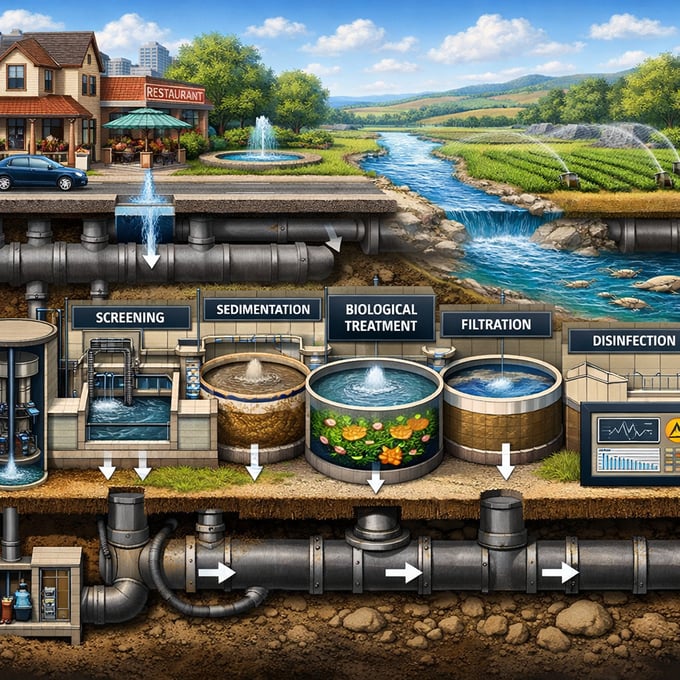
Wastewater treatment is a multi-stage process that transforms contaminated water into environmentally safe water that can be returned to nature. This process typically involves several stages:
Primary Treatment
During this initial phase, large solid materials are removed through screening and settling. Physical processes separate approximately 60% of suspended solids from the water.
Secondary Treatment
This biological treatment phase uses beneficial bacteria to break down organic matter. The process mirrors nature's water cleaning mechanisms but occurs at an accelerated rate in controlled environments.
Advanced Treatment
Many modern facilities implement additional treatment steps to remove specific contaminants, including:
- Nutrient removal to prevent algal blooms - Disinfection to eliminate harmful bacteria - Chemical treatment for specific pollutants - Membrane filtration for superior water qualityMonitoring and Control: Ensuring System Reliability
Modern wastewater systems rely heavily on advanced monitoring and control systems to maintain efficient operation. SCADA (Supervisory Control and Data Acquisition) systems play a crucial role in this process, providing real-time monitoring and control capabilities.
Critical Monitoring Points Include:
| Location | Parameters Monitored | Purpose |
|---|---|---|
| Collection System | Flow rates, levels | Prevent overflow events |
| Lift Stations | Pump status, alarms | Ensure continuous operation |
| Treatment Plants | Water quality, process efficiency | Maintain treatment standards |
The Final Destination: Environmental Release or Reuse
After treatment, water follows one of several paths:
Environmental Release
Treated water meeting environmental standards is released into natural water bodies, completing the water cycle.
Water Reuse
Increasingly, treated wastewater is being repurposed for:
- Agricultural irrigation - Industrial processes - Groundwater recharge - Landscape irrigationThe Role of Technology in Modern Wastewater Management
Advanced technology plays a crucial role in ensuring wastewater systems operate efficiently and reliably. Modern systems incorporate:
Remote Monitoring Solutions
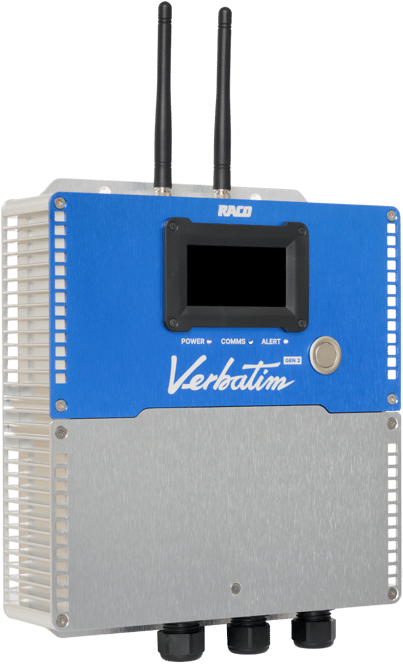
Companies like RACO Manufacturing & Engineering provide sophisticated alarm monitoring systems that alert operators to potential issues before they become critical problems. These systems help maintain continuous operation and prevent environmental incidents.
Data Analytics
Modern treatment facilities use data analytics to optimize operations, predict maintenance needs, and improve energy efficiency.
Environmental Impact and Sustainability
Understanding where water goes after we use it highlights the importance of responsible water usage and system maintenance. Modern wastewater treatment facilities increasingly focus on:
- Energy efficiency and renewable energy use - Resource recovery (biogas, nutrients, water reuse) - Reduced chemical usage - Smaller environmental footprintConclusion: The Continuous Cycle of Water
The journey of wastewater from your drain to its final destination is a testament to modern engineering and environmental stewardship. This complex system ensures our water resources are protected while maintaining public health and environmental quality.
Understanding where water goes helps us appreciate the importance of maintaining these critical systems and the role we all play in protecting our water resources.