

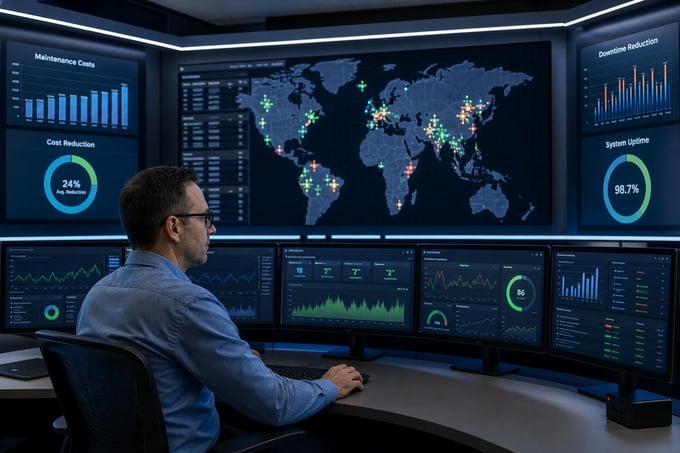
Remote Equipment Monitoring: The Complete Guide to Modern Industrial Automation


Remote Equipment Monitoring: The Complete Guide to Modern Industrial Automation
In today's fast-paced industrial environment, unplanned downtime can cost companies thousands of dollars per hour. Remote equipment monitoring has emerged as a crucial solution, enabling organizations to track, analyze, and maintain their critical assets from anywhere in the world. This comprehensive guide explores how remote monitoring systems are revolutionizing equipment maintenance and operational efficiency.
What is Remote Equipment Monitoring?
Remote equipment monitoring refers to the practice of tracking and analyzing equipment performance, health, and status from a distance using specialized sensors, software, and communication technologies. This technology allows maintenance teams and operators to observe critical parameters, receive real-time alerts, and make data-driven decisions without being physically present at the equipment location.
The Evolution of Equipment Monitoring
| Era | Monitoring Method | Key Characteristics |
|---|---|---|
| Pre-1980s | Manual Inspection | Physical checks, paper logs, reactive maintenance |
| 1980s-1990s | Basic Automation | Simple sensors, local alarms, minimal data collection |
| 2000s-2010s | SCADA Systems | Computerized monitoring, basic remote access, historical data |
| 2010s-Present | IoT Integration | Cloud connectivity, AI analytics, predictive maintenance |
Core Components of Remote Equipment Monitoring Systems
1. Sensors and Data Collection
Modern remote monitoring systems rely on various sensors to collect critical data points:
- Temperature sensors
- Pressure transducers
- Flow meters
- Vibration monitors
- Level sensors
These sensors continuously gather data that helps identify potential issues before they become critical problems. For example, in wastewater treatment facilities, level sensors combined with remote monitoring capabilities can prevent overflow incidents by alerting operators well in advance of critical conditions.
2. Communication Infrastructure
The backbone of any remote monitoring system is its communication infrastructure. Modern systems utilize various protocols and technologies:
- Cellular networks (4G/5G)
- Satellite communication
- Radio frequency
- Ethernet/IP networks
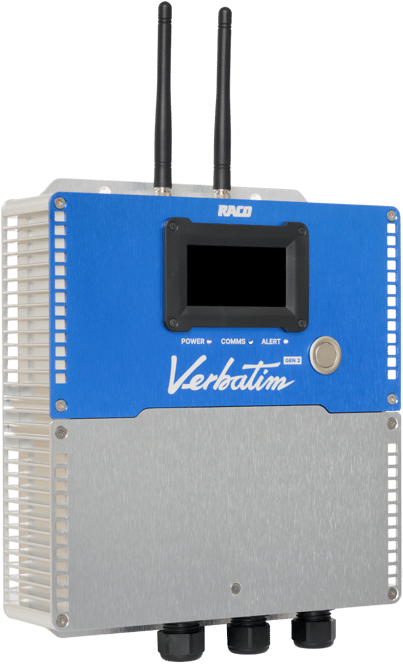
RACO's Catalyst system, for instance, leverages multiple communication pathways to ensure reliable data transmission even in challenging environments. This redundancy is crucial for maintaining continuous monitoring capabilities.
Benefits of Remote Equipment Monitoring
Predictive Maintenance
Remote monitoring enables predictive maintenance by analyzing equipment performance patterns and identifying potential failures before they occur. This proactive approach can reduce maintenance costs by 25-30% and eliminate up to 75% of breakdowns.
Cost Reduction
Organizations implementing remote monitoring systems typically experience:
- 20-40% reduction in maintenance costs
- 10-20% decrease in energy consumption
- 30-50% reduction in unexpected downtime
Implementation Strategies for Remote Equipment Monitoring
1. Assessment and Planning
Before implementing a remote monitoring system, organizations should:
- Identify critical equipment requiring monitoring
- Define specific monitoring parameters
- Establish alert thresholds
- Determine communication requirements
2. System Selection and Integration
Choose a monitoring system that offers:
- Scalability for future expansion
- User-friendly interface
- Robust security features
- Integration capabilities with existing systems
Security Considerations in Remote Monitoring
As remote monitoring systems become more connected, cybersecurity becomes increasingly important. Key security measures include:
| Security Layer | Implementation |
|---|---|
| Network Security | Encrypted communications, VPN access, firewalls |
| Access Control | Multi-factor authentication, role-based access |
| Data Protection | Regular backups, encryption at rest |
Future Trends in Remote Equipment Monitoring
The future of remote equipment monitoring is being shaped by several emerging technologies:
1. Artificial Intelligence and Machine Learning
AI-powered systems are becoming increasingly sophisticated in predicting equipment failures and optimizing maintenance schedules. These systems can analyze vast amounts of data to identify patterns that human operators might miss.
2. Digital Twin Technology
Digital twins provide virtual replicas of physical equipment, enabling more accurate monitoring and simulation of different operating conditions.
3. 5G Integration
The rollout of 5G networks will enable faster, more reliable communication and support for more connected devices.
Best Practices for Remote Equipment Monitoring
To maximize the benefits of remote monitoring systems:
- Establish clear monitoring protocols and response procedures
- Provide comprehensive training for system users
- Regularly review and update alert thresholds
- Maintain detailed documentation of system changes and maintenance activities
- Conduct periodic system audits and updates
Conclusion
Remote equipment monitoring has become an essential tool for modern industrial operations. By implementing these systems effectively, organizations can significantly improve their operational efficiency, reduce costs, and prevent unexpected downtime. As technology continues to evolve, the capabilities of remote monitoring systems will only expand, offering even greater benefits to organizations that embrace these solutions.
For more information about implementing remote monitoring solutions for your facility, contact RACO Manufacturing & Engineering to discuss how our advanced monitoring systems can help protect your critical assets and optimize your operations.