

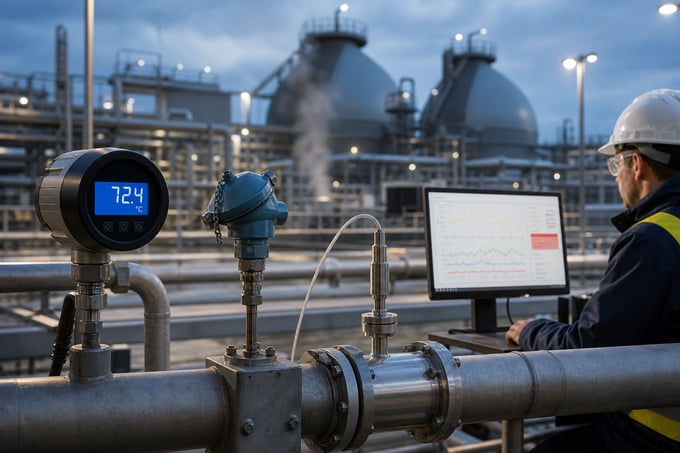
Temperature Monitoring Devices: A Complete Guide for Wastewater Management


Temperature Monitoring Devices: A Complete Guide for Wastewater Management
Temperature monitoring devices play a crucial role in wastewater treatment facilities, ensuring optimal process efficiency and regulatory compliance. As experts in industrial automation and monitoring solutions, we understand that maintaining precise temperature control throughout the treatment process is essential for biological treatment effectiveness, equipment protection, and environmental compliance.
Understanding Temperature Monitoring in Wastewater Treatment
Temperature affects virtually every aspect of wastewater treatment, from biological activity to chemical reactions. Proper temperature monitoring helps facilities:
- Optimize biological treatment processes
- Protect equipment from temperature-related damage
- Ensure compliance with discharge permits
- Maintain operational efficiency
Types of Temperature Monitoring Devices
1. Resistance Temperature Detectors (RTDs)
RTDs are among the most accurate and stable temperature monitoring devices used in wastewater treatment. These devices operate on the principle that electrical resistance in metals changes predictably with temperature.
| RTD Advantages | RTD Limitations |
|---|---|
| High accuracy (±0.1°C) | Higher initial cost |
| Excellent stability | Slower response time |
| Wide temperature range | Requires external power source |
2. Thermocouples
Thermocouples are versatile temperature sensors that generate a voltage based on temperature differences. They're particularly useful in harsh wastewater environments due to their durability and wide temperature range.
3. Digital Temperature Sensors
Modern digital temperature sensors offer advanced features like wireless connectivity, data logging, and remote monitoring capabilities. These devices integrate seamlessly with SCADA systems and alarm dialers for comprehensive facility monitoring.
Critical Applications in Wastewater Treatment
Influent Temperature Monitoring
Monitoring influent temperature is crucial for: - Predicting treatment effectiveness - Adjusting chemical dosing rates - Protecting biological treatment processes - Ensuring compliance with temperature limits
Digester Temperature Control
Anaerobic digesters require precise temperature control for optimal performance. Temperature monitoring devices help maintain the ideal environment for methane-producing bacteria, typically between 95-98°F (35-37°C) for mesophilic digestion.
Integration with Alarm Systems
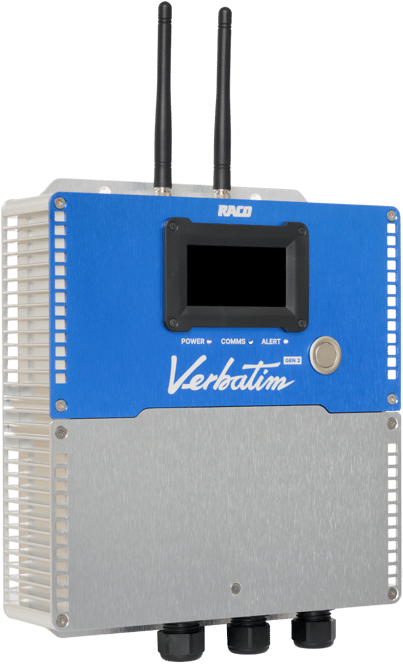
Temperature monitoring devices should be integrated with reliable alarm systems to alert operators of critical temperature variations. RACO's Catalyst and AlarmAgent.com systems provide:
- 24/7 temperature monitoring
- Instant alarm notifications
- Data logging capabilities
- Remote monitoring access
- Integration with existing SCADA systems
Best Practices for Temperature Monitoring
Sensor Placement
Proper sensor placement is critical for accurate temperature monitoring. Consider these factors:
| Location | Considerations |
|---|---|
| Influent channels | Flow patterns, mixing zones |
| Aeration basins | Depth, circulation patterns |
| Digesters | Multiple monitoring points, stratification |
Maintenance and Calibration
Regular maintenance ensures accurate temperature monitoring:
- Implement a calibration schedule based on manufacturer recommendations
- Clean sensors regularly to prevent biofilm accumulation
- Document all maintenance activities and calibration results
- Train operators on proper maintenance procedures
Regulatory Compliance and Reporting
Temperature monitoring devices help facilities meet regulatory requirements by:
- Maintaining continuous temperature records
- Generating automated compliance reports
- Providing data for trend analysis
- Supporting process optimization efforts
Future Trends in Temperature Monitoring
The future of temperature monitoring in wastewater treatment includes:
- IoT-enabled sensors for enhanced connectivity
- AI-powered predictive maintenance
- Advanced data analytics capabilities
- Improved sensor accuracy and durability
Conclusion
Effective temperature monitoring is essential for wastewater treatment success. By selecting appropriate temperature monitoring devices and integrating them with reliable alarm systems, facilities can ensure optimal operation, regulatory compliance, and environmental protection.
For expert guidance on implementing temperature monitoring solutions in your wastewater facility, contact RACO Manufacturing & Engineering. Our team can help you select and integrate the right monitoring and alarm systems for your specific needs.