

Types of Sewerage System: A Comprehensive Guide to Modern Wastewater Infrastructure


Types of Sewerage System: A Comprehensive Guide to Modern Wastewater Infrastructure
Managing wastewater effectively is crucial for public health and environmental protection in modern society. Understanding the different types of sewerage systems is essential for municipal engineers, utility managers, and infrastructure planners. This comprehensive guide explores the various sewerage system types, their applications, advantages, and the critical role of monitoring and control in maintaining these vital infrastructure networks.
Understanding Sewerage Systems: The Basics
A sewerage system is a network of pipes, pumping stations, and treatment facilities that collect, transport, and process wastewater from residential, commercial, and industrial sources. These systems protect public health by safely removing contaminated water and preventing waterborne diseases. The choice of sewerage system depends on various factors, including:
- Topography of the area
- Population density
- Ground conditions
- Environmental considerations
- Economic feasibility
Primary Types of Sewerage Systems
1. Combined Sewerage System
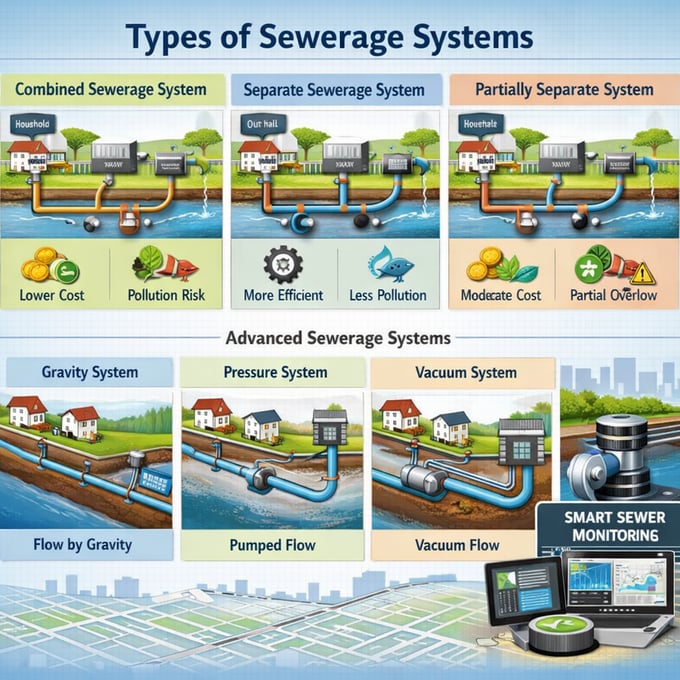
Combined sewerage systems collect both sanitary sewage and stormwater in the same pipeline network. This traditional approach was common in older cities and continues to serve many urban areas today.
| Advantages | Disadvantages |
|---|---|
| Lower initial construction costs | Risk of combined sewer overflow (CSO) |
| Simpler network design | Higher treatment costs |
| Single pipeline network | Environmental concerns during heavy rainfall |
2. Separate Sewerage System
Separate systems utilize distinct networks for sanitary sewage and stormwater. This modern approach offers better control and treatment efficiency but requires more extensive infrastructure.
| Advantages | Disadvantages |
|---|---|
| Better treatment efficiency | Higher initial construction costs |
| Reduced environmental impact | More complex maintenance |
| Lower treatment plant capacity requirements | Requires more space for dual networks |
3. Partially Separate System
This hybrid approach combines elements of both combined and separate systems, typically collecting roof drainage with sanitary sewage while handling street runoff separately.
Advanced Sewerage System Classifications
1. Conventional Gravity Systems
Gravity systems remain the most common type of sewerage system, utilizing natural slope to transport wastewater. These systems require careful planning and precise elevation calculations to ensure proper flow.
2. Pressure Sewerage Systems
Pressure systems use pumps to move wastewater through pressurized pipes, ideal for areas where gravity systems aren't practical. RACO Manufacturing's alarm dialers and monitoring systems play a crucial role in maintaining these systems by providing immediate notification of pump failures or system irregularities.
3. Vacuum Sewerage Systems
Vacuum systems use negative pressure to transport wastewater, offering unique advantages for specific scenarios:
| Application | Benefits |
|---|---|
| Flat terrain | No gravity requirements |
| High water table areas | Minimal groundwater infiltration |
| Rocky terrain | Shallow installation possible |
Modern Monitoring and Control Systems
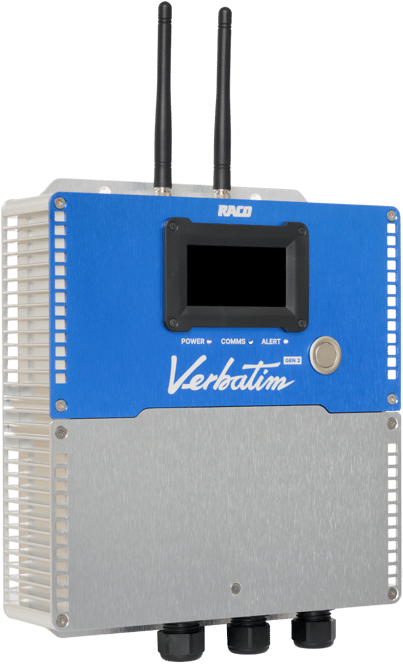
Effective sewerage system operation requires sophisticated monitoring and control systems. RACO's advanced monitoring solutions provide:
- Real-time flow monitoring
- Pump station status alerts
- Overflow detection and notification
- Remote system control capabilities
Choosing the Right Sewerage System
Selecting the appropriate sewerage system involves careful consideration of multiple factors:
Environmental Considerations
Environmental impact assessment, including groundwater protection and ecosystem effects, must guide system selection.
Economic Factors
Initial construction costs, operational expenses, and long-term maintenance requirements influence system choice.
Technical Requirements
Local topography, soil conditions, and existing infrastructure determine technical feasibility.
Future Trends in Sewerage Systems
The sewerage industry continues to evolve with new technologies and approaches:
- Smart monitoring systems with AI integration
- Sustainable design practices
- Energy recovery systems
- Advanced treatment technologies
Maintenance and Monitoring Best Practices
Regular maintenance and monitoring are essential for optimal sewerage system performance. RACO's monitoring solutions help utilities:
- Prevent system failures through early detection
- Optimize operational efficiency
- Reduce maintenance costs
- Ensure regulatory compliance
Conclusion
Understanding the various types of sewerage systems is crucial for making informed infrastructure decisions. Whether implementing a new system or upgrading existing infrastructure, considering factors such as local conditions, environmental impact, and long-term maintenance requirements is essential. Modern monitoring and control systems, like those provided by RACO Manufacturing, play a vital role in ensuring these critical systems operate efficiently and reliably.
For more information about monitoring solutions for your sewerage system, contact RACO Manufacturing & Engineering's expert team or visit our website to explore our range of alarm and monitoring solutions.