


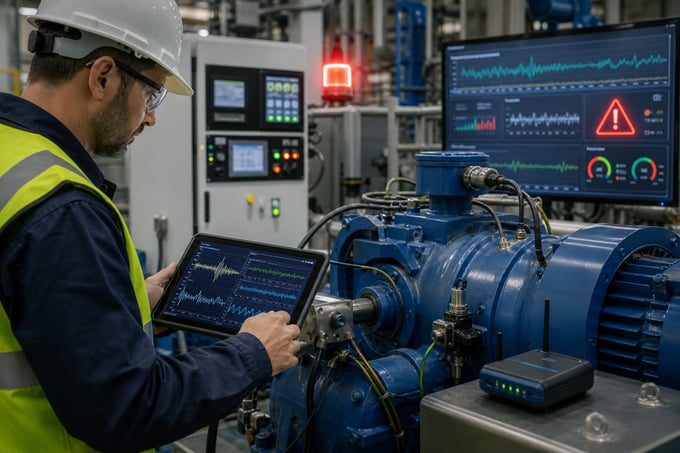
Vibration Monitoring Systems: The Complete Guide to Equipment Health & Reliability [2024]


Vibration Monitoring Systems: The Complete Guide to Equipment Health & Reliability
In today's industrial landscape, unplanned equipment downtime can cost facilities thousands of dollars per hour. A vibration monitoring system serves as your first line of defense against catastrophic machine failures, providing early warning signs of potential issues before they escalate into costly breakdowns. This comprehensive guide explores everything you need to know about vibration monitoring systems, from their fundamental principles to advanced implementation strategies.
Understanding Vibration Monitoring Systems
A vibration monitoring system is a sophisticated technology that continuously measures and analyzes the vibration patterns of rotating machinery. These systems use specialized sensors to detect subtle changes in equipment operation, helping maintenance teams identify potential problems early in their development.
Key Components of a Vibration Monitoring System
| Component | Function |
|---|---|
| Sensors/Transducers | Convert mechanical vibration into electrical signals |
| Data Acquisition Unit | Collects and processes vibration signals |
| Analysis Software | Interprets data and generates actionable insights |
| Alert System | Notifies personnel of abnormal conditions |
Benefits of Implementing a Vibration Monitoring System
The implementation of a vibration monitoring system offers numerous advantages that directly impact your facility's bottom line:
1. Predictive Maintenance Capabilities
Rather than waiting for equipment to fail or relying on time-based maintenance schedules, vibration monitoring enables true predictive maintenance. This approach can reduce maintenance costs by 25-30% and eliminate up to 75% of breakdowns.
2. Extended Equipment Life
By identifying and addressing issues early, vibration monitoring helps extend machinery lifespan, often by 20% or more compared to unmonitored equipment.
3. Improved Safety
Early detection of equipment problems helps prevent catastrophic failures that could pose safety risks to personnel.
Types of Vibration Monitoring Systems
Portable Systems
These handheld devices are ideal for periodic measurements and smaller facilities. They offer flexibility but require manual data collection.
Online Continuous Monitoring Systems
Permanently installed systems provide 24/7 monitoring and real-time alerts. They're particularly valuable for critical equipment and large facilities.
Wireless Systems
Modern wireless solutions offer the benefits of continuous monitoring without extensive wiring requirements, reducing installation costs and complexity.
Selecting the Right Vibration Monitoring System
When choosing a vibration monitoring system, consider these crucial factors:
| Factor | Consideration |
|---|---|
| Equipment Criticality | How essential is the machinery to operations? |
| Monitoring Requirements | Continuous vs. periodic monitoring needs |
| Integration Capabilities | Compatibility with existing systems |
| Budget Constraints | Initial investment vs. long-term benefits |
Best Practices for Implementation
Successfully implementing a vibration monitoring system requires careful planning and execution:
1. Establish Baseline Measurements
Document normal operating conditions for each piece of equipment to create accurate reference points for future comparison.
2. Define Alert Thresholds
Set appropriate warning and alarm levels based on equipment specifications and operational experience.
3. Train Personnel
Ensure maintenance teams understand how to interpret vibration data and respond to alerts effectively.
Common Applications in Industry
Vibration monitoring systems find critical applications across various industries:
Water and Wastewater Treatment
Monitoring pumps, blowers, and treatment equipment to ensure continuous operation of essential public services.
Manufacturing
Protecting production equipment and maintaining product quality through consistent machine performance.
Power Generation
Ensuring reliable operation of turbines, generators, and auxiliary equipment.
Integration with SCADA Systems
Modern vibration monitoring systems can integrate seamlessly with SCADA systems, providing several advantages:
- Centralized monitoring and control
- Automated data logging and trending
- Enhanced alarm management
- Improved decision-making through comprehensive data analysis
Future Trends in Vibration Monitoring
The field of vibration monitoring continues to evolve with emerging technologies:
Artificial Intelligence and Machine Learning
Advanced algorithms are improving fault detection accuracy and enabling predictive analytics.
Industrial Internet of Things (IIoT)
Connected sensors and cloud-based platforms are making vibration monitoring more accessible and cost-effective.
Conclusion
A well-implemented vibration monitoring system is no longer a luxury but a necessity for modern industrial operations. By providing early warning of potential equipment issues, these systems help facilities maintain reliability, reduce maintenance costs, and prevent unexpected downtime. As technology continues to advance, vibration monitoring will become increasingly sophisticated, offering even greater value to industrial operations.
Recommended Internal Links:
- Predictive Maintenance Solutions
- SCADA Systems
- Industrial Automation
- Remote Monitoring Solutions
- Equipment Reliability


