

24V DIN Rail Power Supply: The Complete Guide to Industrial Power Solutions


24V DIN Rail Power Supply: The Complete Guide to Industrial Power Solutions
When it comes to powering industrial automation and control systems, a reliable 24V DIN rail power supply is essential for maintaining continuous operations. Whether you're designing a new control panel or upgrading existing infrastructure, understanding these crucial power components can make the difference between a robust system and one prone to failures.
What is a 24V DIN Rail Power Supply?
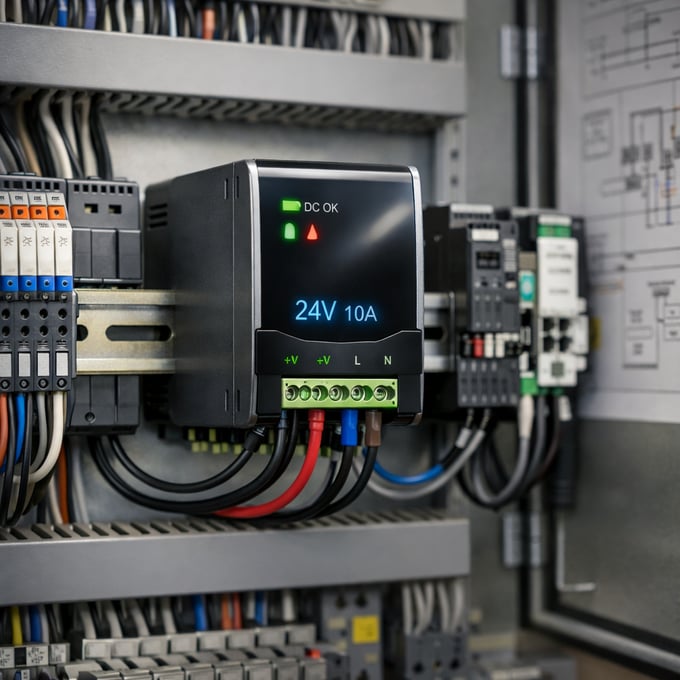
A 24V DIN rail power supply is a standardized power conversion device that transforms AC mains voltage into a regulated 24V DC output. These units mount directly onto standard DIN rails, which are metal strips used for mounting various electrical components within control cabinets. The 24V output is an industrial standard, powering everything from PLCs and sensors to communication devices and control systems.
Key Components and Features
Modern 24V DIN rail power supplies incorporate several essential components:
| Component | Function |
|---|---|
| Input Stage | Accepts wide-range AC input (typically 85-264VAC) |
| Switching Circuit | Converts AC to DC efficiently |
| Output Stage | Provides regulated 24VDC output |
| Protection Circuits | Ensures safety against overload, short circuit, and thermal issues |
Benefits of Using 24V DIN Rail Power Supplies
Industrial facilities choose 24V DIN rail power supplies for several compelling reasons:
1. Space Efficiency
The DIN rail mounting system allows for efficient use of cabinet space and standardized installation. Modern designs feature high power density, delivering more power in a smaller footprint.
2. Safety and Reliability
Quality 24V DIN rail power supplies include multiple protection features:
- Overcurrent protection - Short circuit protection - Overvoltage protection - Thermal shutdown protection3. Easy Installation and Maintenance
The snap-on DIN rail mounting mechanism enables quick installation and replacement, reducing maintenance downtime and associated costs.
Selecting the Right 24V DIN Rail Power Supply
When choosing a power supply, consider these critical factors:
Power Requirements
Calculate your system's total power needs by adding the power requirements of all connected devices. Include a 20% safety margin for future expansion and peak demands.
| System Size | Recommended Power Rating | Typical Applications |
|---|---|---|
| Small | 30-60W | Simple sensor networks, small PLCs |
| Medium | 100-240W | Control panels, automation systems |
| Large | 480W+ | Complex industrial systems, multiple subsystems |
Environmental Considerations
Environmental factors significantly impact power supply performance and longevity:
- Operating temperature range
- Humidity tolerance
- Altitude specifications
- Exposure to vibration or shock
Installation Best Practices
Proper installation ensures optimal performance and longevity:
1. Mounting Orientation
Install the power supply vertically to ensure proper cooling. Maintain recommended clearances for ventilation.
2. Wiring Guidelines
Follow these essential wiring practices:
- Use appropriate wire gauges based on current requirements - Implement proper grounding - Maintain separation between input and output wiring - Include appropriate circuit protection devicesMaintenance and Troubleshooting
Regular maintenance ensures reliable operation:
Preventive Maintenance Schedule
| Interval | Tasks |
|---|---|
| Monthly | Visual inspection, ventilation check |
| Quarterly | Connection tightness, output voltage verification |
| Annually | Full performance test, cleaning, component inspection |
Integration with Industrial Control Systems
24V DIN rail power supplies often interface with various industrial control components. Understanding these interactions is crucial for system design:
Common Integration Points
These power supplies typically connect to:
- Programmable Logic Controllers (PLCs) - Industrial sensors and actuators - Communication modules - Safety systems - Remote monitoring equipmentFuture Trends in DIN Rail Power Supply Technology
The industry continues to evolve with several emerging trends:
- IoT integration for remote monitoring and predictive maintenance
- Higher efficiency ratings exceeding 95%
- Smaller form factors with increased power density
- Enhanced communication capabilities
Conclusion
A reliable 24V DIN rail power supply forms the backbone of any industrial control system. By understanding the selection criteria, installation requirements, and maintenance needs, you can ensure optimal performance and longevity of your industrial power systems. Remember to consider future expansion needs and emerging technologies when planning your power supply infrastructure.
Recommended Internal Links:
- Industrial Control Panels
- PLC Systems
- Industrial Automation Solutions
- Power Monitoring Systems
- Industrial Safety Systems