

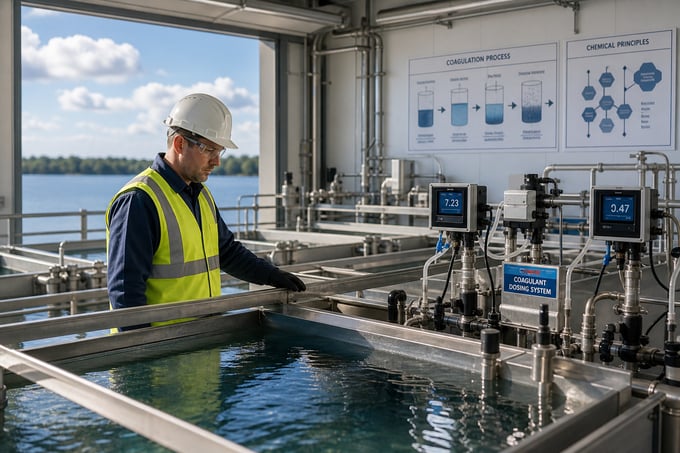
Coagulation in Water Treatment: A Comprehensive Guide to Process Optimization


Coagulation in Water Treatment: A Comprehensive Guide to Process Optimization
For water treatment facility operators and managers, achieving optimal water quality while maintaining operational efficiency is a constant challenge. Coagulation in water treatment stands as one of the most critical processes in producing clean, safe drinking water. This comprehensive guide explores the intricacies of coagulation, its importance in water treatment, and how modern automation can optimize this essential process.
Understanding Coagulation in Water Treatment
Coagulation is a chemical process that transforms suspended particles in raw water into larger, more easily removable clumps. These suspended particles, which can include dirt, organic matter, and microscopic organisms, are often too small to remove through filtration alone. The process works by neutralizing the negative charges that keep particles suspended in water, allowing them to combine and form larger particles called "floc."
The Chemistry Behind Coagulation
The coagulation process relies on several key chemical principles:
| Chemical Principle | Role in Coagulation |
|---|---|
| Charge Neutralization | Negates the repulsive forces between particles |
| Particle Destabilization | Allows particles to come together |
| Sweep Flocculation | Creates larger, settleable particles |
Common Coagulants in Water Treatment
Several types of coagulants are used in water treatment facilities, each with specific advantages:
Inorganic Coagulants
- Aluminum sulfate (Alum) - Most widely used due to cost-effectiveness and reliability
- Ferric chloride - Effective in cold water conditions
- Polyaluminum chloride (PAC) - Works well across a broader pH range
Organic Coagulants
Natural and synthetic polymers serve as organic coagulants, often used in conjunction with inorganic options to enhance performance. These include:
- Cationic polymers
- Anionic polymers
- Non-ionic polymers
Optimizing the Coagulation Process
Successful coagulation requires careful monitoring and control of several key parameters:
Critical Control Parameters
| Parameter | Optimal Range | Impact on Process |
|---|---|---|
| pH | 5.5-7.5 | Affects coagulant effectiveness |
| Temperature | 15-25°C | Influences reaction kinetics |
| Mixing Speed | Varies by application | Determines floc formation |
Automation and Monitoring in Coagulation Treatment
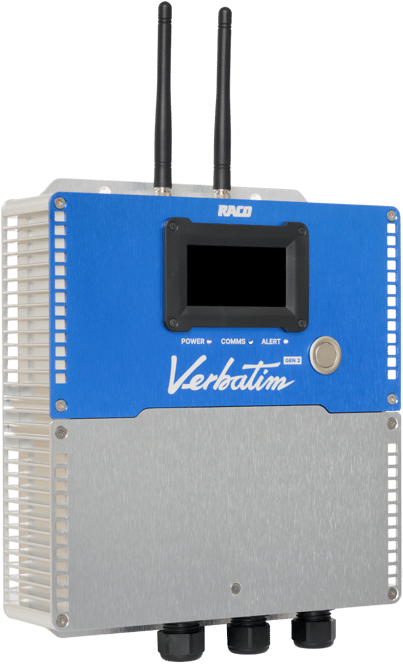
Modern water treatment facilities rely heavily on automation to maintain optimal coagulation conditions. RACO Manufacturing's alarm monitoring systems play a crucial role in this process by:
- Providing real-time monitoring of chemical dosing systems
- Alerting operators to pH variations
- Tracking turbidity levels before and after treatment
- Monitoring mixing speed and retention times
The Role of Remote Monitoring
Remote monitoring systems are essential for maintaining consistent coagulation treatment. RACO's AlarmAgent.com and Catalyst systems enable:
| Feature | Benefit |
|---|---|
| 24/7 Monitoring | Continuous process oversight |
| Instant Alerts | Rapid response to issues |
| Data Logging | Historical analysis and optimization |
Common Challenges and Solutions
Water treatment operators often face several challenges in maintaining optimal coagulation:
Challenge: Varying Raw Water Quality
Solution: Implement adaptive control systems that automatically adjust coagulant dosing based on incoming water quality parameters.
Challenge: Equipment Maintenance
Solution: Utilize preventive maintenance schedules and remote monitoring to identify potential issues before they become critical.
Challenge: Chemical Cost Management
Solution: Optimize dosing through precise monitoring and control systems to minimize chemical waste while maintaining treatment effectiveness.
Future Trends in Coagulation Water Treatment
The water treatment industry continues to evolve, with several emerging trends shaping the future of coagulation processes:
- Integration of artificial intelligence for process optimization
- Development of green coagulants
- Advanced sensor technology for real-time monitoring
- Enhanced automation systems for precise control
Conclusion
Effective coagulation water treatment requires a deep understanding of the process combined with proper monitoring and control systems. By implementing modern automation solutions like RACO's alarm monitoring systems, water treatment facilities can optimize their coagulation processes, ensure consistent water quality, and maintain efficient operations.
For more information about how RACO's monitoring solutions can enhance your water treatment facility's coagulation process, contact our experts today.