


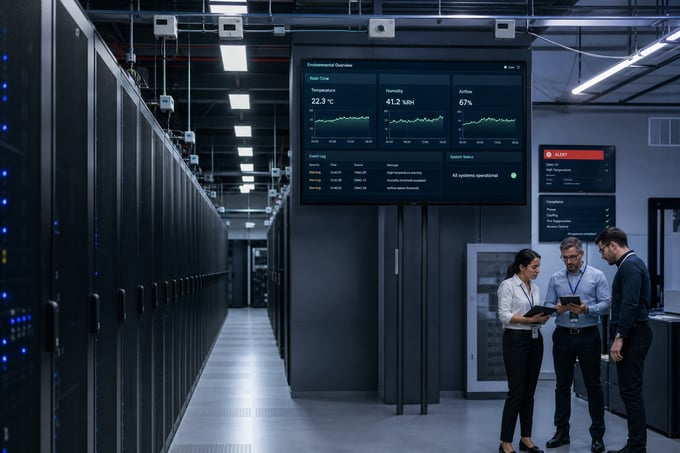
Data Center Environmental Monitoring: A Comprehensive Guide to Protecting Critical Infrastructure


Data Center Environmental Monitoring: A Comprehensive Guide to Protecting Critical Infrastructure
Data center environmental monitoring has become increasingly crucial as organizations rely more heavily on their digital infrastructure. With the average cost of data center downtime reaching $9,000 per minute according to the Ponemon Institute, implementing robust environmental monitoring systems isn't just good practice—it's essential for business continuity.
Understanding Data Center Environmental Monitoring
Data center environmental monitoring encompasses the continuous surveillance and management of various environmental factors that could impact the performance, reliability, and efficiency of data center operations. This sophisticated monitoring system serves as an early warning mechanism, helping prevent costly downtime and equipment damage.
Key Environmental Parameters to Monitor
| Parameter | Optimal Range | Impact on Operations |
|---|---|---|
| Temperature | 64-81°F (18-27°C) | Affects equipment performance and longevity |
| Humidity | 40-60% RH | Prevents static electricity and condensation |
| Airflow | Facility-specific | Ensures proper cooling distribution |
| Water Presence | None | Prevents equipment damage and electrical hazards |
Critical Components of Environmental Monitoring Systems
A comprehensive data center environmental monitoring solution should incorporate several key components working in harmony to provide complete facility oversight:
1. Sensor Networks
Modern data centers require a sophisticated network of sensors strategically placed throughout the facility. These sensors must be capable of real-time monitoring and instant alert generation when parameters deviate from acceptable ranges.
2. Remote Terminal Units (RTUs)
RTUs serve as the backbone of environmental monitoring systems, collecting data from various sensors and transmitting it to central monitoring stations. RACO's Catalyst RTU, for example, provides industry-leading reliability with its advanced monitoring capabilities and redundant communication options.
3. Data Analysis and Reporting Tools
Advanced analytics platforms process the collected data to identify trends, predict potential issues, and generate detailed reports for compliance and optimization purposes.
Best Practices for Implementation
Strategic Sensor Placement
Proper sensor placement is crucial for effective environmental monitoring. Consider these key locations:
- Server rack inlets and outlets
- CRAC/CRAH units
- Power distribution units
- Below raised floors
- Near entry points
Integration with Building Management Systems
Modern data center environmental monitoring systems should seamlessly integrate with existing building management systems (BMS) to provide comprehensive facility oversight. This integration enables:
- Centralized control and monitoring
- Automated response mechanisms
- Enhanced energy efficiency
- Streamlined maintenance procedures
Advanced Monitoring Features
Today's environmental monitoring solutions offer sophisticated capabilities that go beyond basic parameter tracking:
Predictive Analytics
By leveraging machine learning algorithms, modern monitoring systems can predict potential environmental issues before they occur, allowing for proactive maintenance and risk mitigation.
Remote Monitoring Capabilities
Cloud-based monitoring solutions enable facility managers to:
- Access real-time data from anywhere
- Receive instant alerts on mobile devices
- Generate automated reports
- Implement remote control measures
Compliance and Standards
Data center environmental monitoring systems must adhere to various industry standards and regulations:
| Standard/Regulation | Requirements |
|---|---|
| ASHRAE Guidelines | Temperature and humidity ranges for IT equipment |
| ISO/IEC 27001 | Information security management systems |
| HIPAA | Healthcare data protection requirements |
ROI and Cost Considerations
While implementing comprehensive environmental monitoring systems requires initial investment, the return on investment is substantial:
Direct Cost Savings
- Reduced energy consumption through optimized cooling
- Lower maintenance costs through predictive maintenance
- Decreased risk of equipment failure
- Extended hardware lifecycle
Future Trends in Data Center Environmental Monitoring
The field of data center environmental monitoring continues to evolve with emerging technologies:
- AI-driven optimization
- IoT sensor integration
- Edge computing monitoring solutions
- Sustainable monitoring practices
Conclusion
Effective data center environmental monitoring is no longer optional in today's digital landscape. By implementing comprehensive monitoring solutions and following industry best practices, organizations can protect their critical infrastructure, optimize operations, and ensure business continuity.
For more information about implementing robust environmental monitoring solutions in your data center, contact RACO Manufacturing & Engineering to learn about our advanced RTU systems and monitoring solutions.


