

Float Level Switches: The Complete Guide to Selection, Installation, and Maintenance in Industrial Applications


Float Level Switches: The Complete Guide to Selection, Installation, and Maintenance in Industrial Applications
Float level switches are fundamental components in liquid level control systems, serving as reliable and cost-effective solutions for monitoring and managing fluid levels across various industrial applications. Whether you're managing wastewater treatment facilities, controlling industrial processes, or maintaining water storage systems, understanding float switches is crucial for operational efficiency and system reliability.
What Are Float Level Switches?
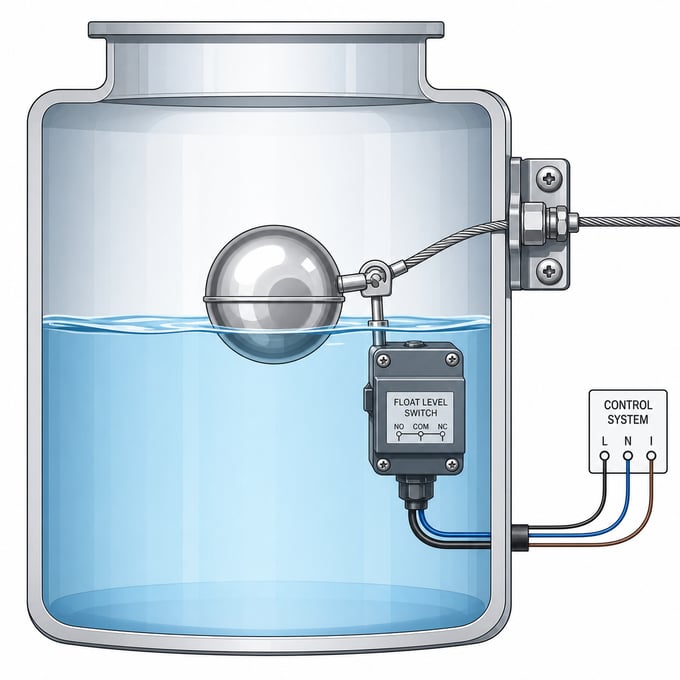
Float level switches are mechanical devices that use buoyancy to detect liquid levels and trigger corresponding actions. As the liquid level rises or falls, the float mechanism moves accordingly, activating or deactivating electrical switches that control pumps, alarms, or other equipment.
| Component | Function |
|---|---|
| Float Ball | Provides buoyancy and movement in response to liquid levels |
| Switch Mechanism | Converts mechanical movement to electrical signals |
| Cable Assembly | Carries electrical signals and provides mechanical support |
| Mounting Hardware | Secures the switch to the tank or vessel |
Types of Float Level Switches
1. Vertical Float Switches
Vertical float switches operate along a vertical axis, typically mounted through the top or bottom of a tank. These switches are ideal for applications requiring precise level detection and minimal space requirements.
2. Horizontal Float Switches
Horizontal float switches are mounted on the side of tanks and operate on a horizontal plane. They're particularly effective for point-level detection and are often used in applications where top mounting isn't practical.
3. Multi-Point Float Switches
These sophisticated systems use multiple float mechanisms to monitor different levels within the same tank, providing comprehensive level control and monitoring capabilities.
Key Applications of Float Level Switches
Wastewater Treatment
In wastewater treatment facilities, float switches play a crucial role in:
- Lift station pump control - High-level alarm activation - Overflow prevention - Sump pump operationIndustrial Processing
Manufacturing and processing facilities rely on float switches for:
- Chemical storage monitoring - Process tank level control - Cooling system management - Safety shutdown systemsSelection Criteria for Float Level Switches
Choosing the right float switch requires careful consideration of several factors:
| Factor | Considerations |
|---|---|
| Media Compatibility | Chemical resistance, temperature tolerance |
| Environmental Conditions | Temperature, pressure, humidity |
| Electrical Requirements | Voltage, current ratings, switch type |
| Physical Constraints | Installation space, mounting options |
Installation Best Practices
Proper installation is crucial for reliable operation:
1. Location Selection
Choose mounting locations free from turbulence, away from inlet/outlet pipes, and protected from debris accumulation.
2. Cable Management
Ensure proper cable support and strain relief to prevent damage and maintain seal integrity.
3. Calibration
Verify switch activation points and adjust tether lengths as needed for accurate level detection.
Maintenance and Troubleshooting
Regular maintenance ensures long-term reliability:
Preventive Maintenance Schedule
| Task | Frequency |
|---|---|
| Visual Inspection | Monthly |
| Clean Float Mechanism | Quarterly |
| Check Electrical Connections | Semi-annually |
| Full System Test | Annually |
Advanced Features and Integration
Modern float switch systems often incorporate advanced features:
- Remote monitoring capabilities - Digital output options - Integration with SCADA systems - Redundant safety featuresSafety Considerations
When working with float switches, safety should always be a priority:
- Follow proper lockout/tagout procedures - Use appropriate personal protective equipment - Ensure proper grounding and electrical safety - Maintain hazardous location certifications where applicableCost Considerations and ROI
Understanding the total cost of ownership helps in making informed decisions:
| Cost Factor | Impact |
|---|---|
| Initial Investment | Hardware, installation, configuration |
| Operating Costs | Energy consumption, maintenance |
| Replacement Costs | Spare parts, upgrade requirements |
| Downtime Costs | Production losses, maintenance time |
Future Trends and Innovations
The float switch industry continues to evolve with new technologies:
- Smart sensor integration - IoT connectivity - Predictive maintenance capabilities - Enhanced materials for extreme conditionsConclusion
Float level switches remain a cornerstone of liquid level control systems across industries. Their reliability, cost-effectiveness, and versatility make them an essential component in modern industrial applications. By understanding proper selection, installation, and maintenance practices, organizations can maximize the benefits of these crucial devices while ensuring long-term operational success.
For expert guidance on selecting and implementing float level switches for your specific application, contact RACO Manufacturing & Engineering. Our team of specialists can help you design and implement the optimal solution for your needs.