


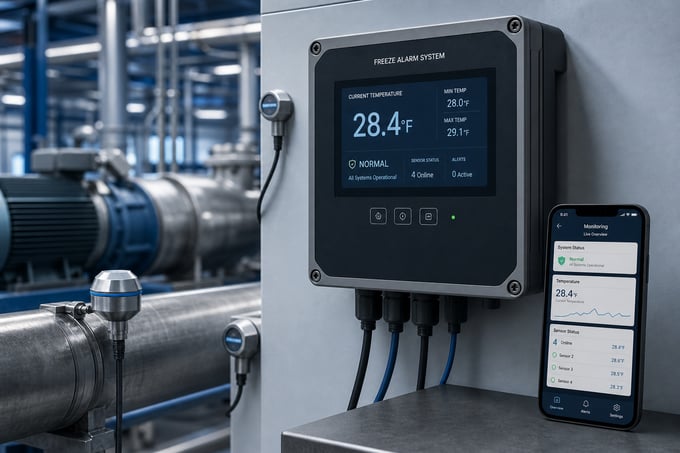
Freeze Alarm Systems: The Ultimate Guide to Protecting Your Infrastructure from Cold Weather Damage


Freeze Alarm Systems: The Ultimate Guide to Protecting Your Infrastructure from Cold Weather Damage
When winter temperatures plummet, the risk of catastrophic damage to critical infrastructure skyrockets. A freeze alarm system serves as your first line of defense against frozen pipes, equipment failure, and costly repairs. This comprehensive guide will help you understand how freeze alarms work, why they're essential, and how to choose the right system for your facility.
What is a Freeze Alarm and Why is it Critical?
A freeze alarm is a specialized monitoring device that alerts facility managers when temperatures approach freezing conditions. These systems provide early warning protection against freeze damage, which can result in burst pipes, damaged equipment, and extensive water damage. The cost of installing a freeze alarm system is minimal compared to the potential damages from a single freeze event.
| Potential Freeze Damage Costs | Average Repair Cost |
|---|---|
| Burst Water Pipe | $5,000 - $15,000 |
| Equipment Replacement | $10,000 - $50,000 |
| Structural Water Damage | $20,000 - $100,000+ |
Key Components of an Effective Freeze Alarm System
A comprehensive freeze alarm system consists of several critical components working together to provide reliable protection:
1. Temperature Sensors
High-precision temperature sensors monitor ambient conditions in vulnerable areas. Modern sensors offer accuracy within 0.5°F and can be strategically placed throughout a facility.
2. Control Unit
The central control unit processes sensor data and triggers alerts when temperatures fall below preset thresholds. Advanced units like RACO's Catalyst system provide multiple monitoring points and customizable alert settings.
3. Communication System
When temperatures approach freezing, the system must reliably notify key personnel. Modern freeze alarms utilize multiple communication channels:
- Voice calls - SMS text messages - Email alerts - Mobile app notifications - Integration with SCADA systemsAdvanced Features of Modern Freeze Alarm Systems
Today's freeze alarm technology offers sophisticated capabilities that go beyond simple temperature monitoring:
Remote Monitoring and Control
Cloud-based systems allow facility managers to monitor conditions and adjust settings from anywhere using mobile devices or computers. This remote access capability is crucial for managing multiple facilities or responding to alerts during off-hours.
Data Logging and Analytics
Advanced systems maintain detailed records of temperature variations and system responses, enabling:
- Trend analysis - Predictive maintenance - Compliance reporting - System optimizationIndustry Applications for Freeze Alarm Systems
Freeze alarms are essential across various industries and applications:
| Industry | Critical Applications |
|---|---|
| Water/Wastewater | Pump stations, Treatment plants, Distribution systems |
| Manufacturing | Process equipment, Raw material storage, Finished goods |
| Agriculture | Greenhouse systems, Irrigation equipment, Storage facilities |
| Commercial Buildings | HVAC systems, Sprinkler systems, Water supply |
Best Practices for Freeze Alarm Implementation
To maximize the effectiveness of your freeze alarm system:
1. Strategic Sensor Placement
Install temperature sensors in vulnerable areas such as:
- Near exterior walls - In unheated spaces - Around critical equipment - Near water pipes and systems2. Regular System Testing
Implement a routine testing schedule that includes:
- Monthly sensor calibration checks - Communication system verification - Battery backup testing - Alert response procedures3. Personnel Training
Ensure all relevant staff members understand:
- System operation procedures - Alert response protocols - Emergency shutdown procedures - Troubleshooting basicsSelecting the Right Freeze Alarm System
When choosing a freeze alarm system, consider these key factors:
System Reliability
Look for systems with proven track records and robust backup features. RACO's alarm systems offer multiple layers of redundancy and backup power options to ensure continuous protection.
Scalability
Choose a system that can grow with your needs. Modern systems should support additional sensors and monitoring points without requiring complete replacement.
Integration Capabilities
Select systems that can integrate with your existing infrastructure and control systems. This includes compatibility with:
- SCADA systems - Building automation systems - Emergency response systems - Facility management softwareMaintenance and Long-term Care
Proper maintenance ensures reliable freeze protection:
| Maintenance Task | Frequency | Importance |
|---|---|---|
| Sensor Calibration | Monthly | Critical |
| Battery Check | Quarterly | High |
| System Test | Semi-annually | Essential |
| Software Updates | As Released | Important |
Conclusion
A reliable freeze alarm system is an essential investment for protecting valuable infrastructure and equipment from cold weather damage. By understanding the components, features, and best practices outlined in this guide, you can make informed decisions about implementing and maintaining an effective freeze protection system.
For expert guidance on selecting and implementing a freeze alarm system tailored to your facility's needs, contact RACO Manufacturing & Engineering. Our team of specialists can help you design a comprehensive solution that provides peace of mind during the coldest months of the year.


