

How to Remove Lead from Water: A Comprehensive Guide for Water Treatment Professionals


How to Remove Lead from Water: A Comprehensive Guide for Water Treatment Professionals
Lead contamination in water systems remains a critical concern for water treatment facilities and municipalities across the United States. As water treatment professionals, understanding effective methods to remove lead from water is crucial for protecting public health and maintaining compliance with EPA regulations. This comprehensive guide explores proven techniques, technologies, and best practices for lead removal in water treatment systems.
Understanding Lead Contamination in Water Systems
Lead enters water systems through various sources, primarily through corroding pipes, solder, and fixtures. While the EPA's Lead and Copper Rule mandates action levels at 15 parts per billion (ppb), the goal should be to eliminate lead presence entirely, as no level of lead exposure is considered safe.
Common Sources of Lead Contamination:
| Source | Description | Risk Level |
|---|---|---|
| Lead Service Lines | Pipes connecting main water lines to buildings | High |
| Lead Solder | Used to join copper pipes (pre-1986) | Medium |
| Brass Fixtures | Contains lead alloys | Medium-Low |
Primary Methods to Remove Lead from Water
1. Chemical Treatment
Corrosion control treatment remains one of the most effective methods to prevent lead leaching into water systems. This approach involves adjusting water chemistry to create a protective scale inside pipes.
Key Chemical Treatment Strategies:
- pH adjustment (typically maintaining levels between 7.5 and 9.5)
- Addition of orthophosphates to create protective coating
- Alkalinity adjustment to stabilize water chemistry
2. Physical Filtration Methods
Advanced filtration systems play a crucial role in lead removal, particularly in treatment facilities and point-of-use applications.
| Filtration Method | Effectiveness | Application |
|---|---|---|
| Reverse Osmosis | 95-99% removal | Point-of-use/Plant-wide |
| Activated Carbon | 60-95% removal | Supplementary treatment |
| Ion Exchange | 90-95% removal | Large-scale treatment |
Monitoring and Control Systems for Lead Removal
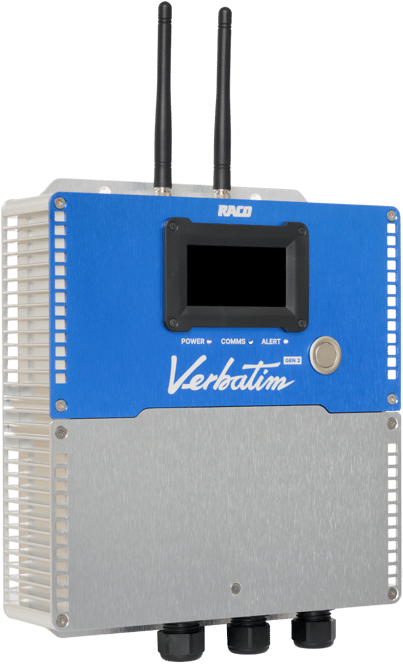
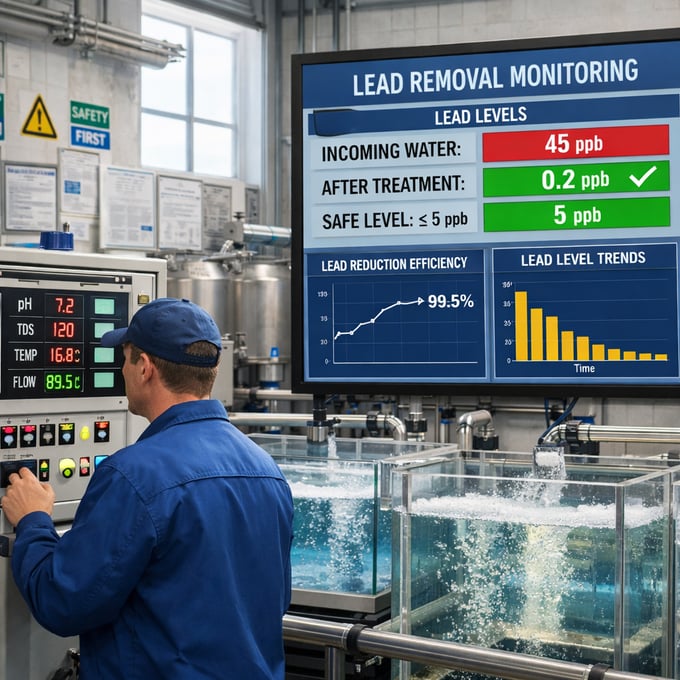
Effective lead removal requires robust monitoring and control systems. RACO Manufacturing & Engineering's AlarmAgent® system provides crucial remote monitoring capabilities for water treatment facilities, ensuring immediate notification of any treatment system anomalies.
Critical Monitoring Parameters:
- pH levels
- Oxidation-reduction potential (ORP)
- Residual disinfectant levels
- Turbidity
- Pressure differentials across filtration systems
Implementation Strategy for Lead Removal
A successful lead removal program requires a comprehensive approach combining multiple treatment methods with effective monitoring and control systems.
Step-by-Step Implementation Process:
- System Assessment
Conduct thorough water quality testing and system evaluation to identify lead sources and contamination levels.
- Treatment Selection
Choose appropriate treatment methods based on system characteristics and contamination levels.
- Monitoring System Installation
Implement comprehensive monitoring solutions, such as RACO's AlarmAgent®, to ensure treatment effectiveness.
- Operational Protocols
Develop and implement standard operating procedures for treatment system maintenance and monitoring.
Best Practices for Ongoing Lead Management
Maintaining effective lead removal systems requires consistent attention to several key areas:
Regular Maintenance Requirements:
| Component | Maintenance Frequency | Critical Checks |
|---|---|---|
| Filtration Systems | Monthly | Media condition, pressure drops |
| Chemical Feed Systems | Weekly | Feed rates, chemical levels |
| Monitoring Equipment | Daily | Calibration, functionality |
Advanced Technologies in Lead Removal
Recent technological advances have introduced new possibilities for lead removal:
Emerging Technologies:
- Nanofiltration systems
- Smart monitoring systems with predictive analytics
- Advanced oxidation processes
Regulatory Compliance and Documentation
Maintaining comprehensive records is essential for regulatory compliance and system optimization. RACO's monitoring systems provide automated logging and reporting capabilities, helping facilities maintain detailed treatment records.
Conclusion
Successfully removing lead from water requires a multi-faceted approach combining appropriate treatment methods with robust monitoring and control systems. By implementing the strategies outlined in this guide and utilizing advanced monitoring solutions like RACO's AlarmAgent®, water treatment facilities can effectively manage lead contamination while ensuring regulatory compliance.
Recommended Internal Links:
- Water treatment monitoring systems
- Remote monitoring solutions
- Water quality control
- Chemical feed monitoring
- Filtration system alarms