

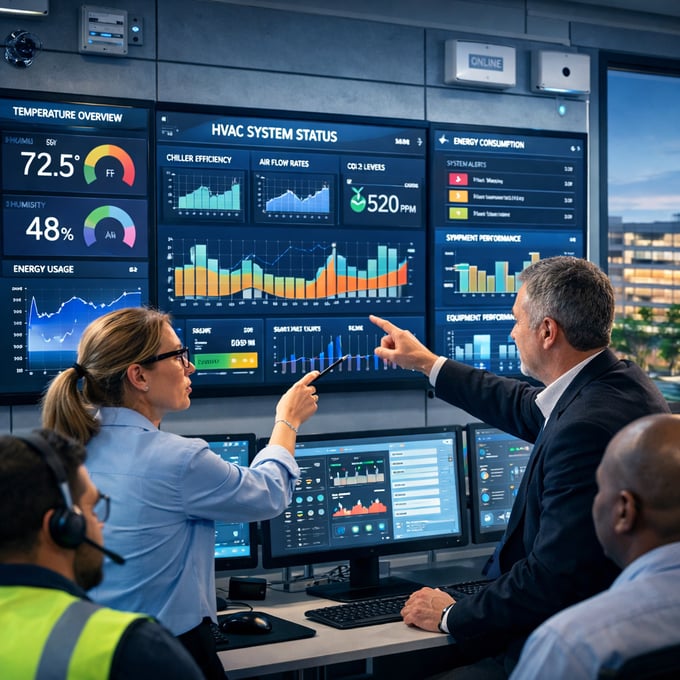
HVAC Monitoring Systems: The Complete Guide to Smart Climate Control Solutions


HVAC Monitoring Systems: The Complete Guide to Smart Climate Control Solutions
For facility managers and building owners, maintaining optimal HVAC performance isn't just about comfort—it's about efficiency, cost savings, and equipment longevity. An HVAC monitoring system serves as your building's nervous system, providing real-time insights into heating, ventilation, and air conditioning performance. In this comprehensive guide, we'll explore how these sophisticated systems are revolutionizing building management and why they're becoming indispensable in modern facilities.
Understanding HVAC Monitoring Systems
An HVAC monitoring system is a network of sensors, controllers, and software that continuously tracks and analyzes your heating, ventilation, and air conditioning equipment's performance. These systems provide real-time data about temperature, humidity, pressure, airflow, and equipment status, enabling proactive maintenance and optimal operation.
Key Components of an HVAC Monitoring System
| Component | Function |
|---|---|
| Sensors | Measure temperature, humidity, pressure, and air quality |
| Controllers | Process sensor data and adjust system parameters |
| Communication Gateway | Enables data transmission between components |
| Monitoring Software | Provides user interface and analytics |
| Alert System | Notifies personnel of issues or maintenance needs |
Benefits of Implementing an HVAC Monitoring System
1. Energy Efficiency Optimization
Modern HVAC monitoring systems can reduce energy consumption by 15-30% through intelligent control and optimization. The system continuously analyzes performance data to identify opportunities for efficiency improvements and automatically adjusts settings to maintain optimal operation.
2. Predictive Maintenance
By tracking equipment performance metrics, these systems can predict potential failures before they occur. This predictive capability allows maintenance teams to address issues proactively, reducing downtime and extending equipment life.
3. Cost Reduction
Through improved efficiency and reduced maintenance needs, HVAC monitoring systems typically deliver ROI within 12-24 months. Organizations can expect significant savings in energy costs, repair expenses, and equipment replacement.
Essential Features of Modern HVAC Monitoring Systems
Remote Monitoring and Control
Modern systems offer secure remote access through web-based interfaces or mobile apps, allowing facility managers to monitor and control HVAC systems from anywhere. This capability is particularly valuable for managing multiple facilities or responding to after-hours emergencies.
Data Analytics and Reporting
Advanced analytics tools process system data to generate actionable insights, helping facility managers make informed decisions about system operation and maintenance. Regular reports provide detailed performance metrics and trend analysis.
Integration Capabilities
Today's HVAC monitoring systems can integrate with other building management systems, including:
- Building Automation Systems (BAS)
- Energy Management Systems (EMS)
- Security Systems
- Fire Safety Systems
Selecting the Right HVAC Monitoring System
Key Considerations
When choosing an HVAC monitoring system, consider these crucial factors:
| Factor | Considerations |
|---|---|
| Scalability | Can the system grow with your facility? |
| Integration | Does it work with existing systems? |
| Support | What level of technical support is available? |
| Cost | What's the total cost of ownership? |
Implementation Best Practices
A successful HVAC monitoring system implementation requires careful planning and execution. Follow these steps for optimal results:
1. Assessment Phase
Begin with a thorough assessment of your current HVAC infrastructure and monitoring needs. Document existing equipment, control systems, and performance metrics.
2. System Design
Work with qualified professionals to design a monitoring system that meets your specific requirements while allowing for future expansion.
3. Installation and Configuration
Ensure proper installation of all components and careful configuration of monitoring parameters and alert thresholds.
4. Training and Documentation
Provide comprehensive training for facility staff and maintain detailed documentation of system operation and maintenance procedures.
Advanced Monitoring Features
Modern HVAC monitoring systems offer sophisticated capabilities that go beyond basic temperature control:
AI and Machine Learning
Advanced systems use artificial intelligence to learn from historical data and optimize performance automatically. These systems can predict maintenance needs and adjust operations based on weather forecasts and occupancy patterns.
Indoor Air Quality Monitoring
With increased focus on health and safety, many systems now include advanced air quality monitoring capabilities, tracking:
- CO2 levels
- Particulate matter
- Volatile organic compounds (VOCs)
- Relative humidity
Conclusion
An HVAC monitoring system is no longer a luxury—it's a necessity for modern facility management. These systems provide the tools needed to optimize performance, reduce costs, and maintain healthy indoor environments. By carefully selecting and implementing the right system, organizations can achieve significant improvements in efficiency, comfort, and operational costs.
For expert guidance on selecting and implementing an HVAC monitoring system that meets your specific needs, contact RACO Manufacturing & Engineering. Our team of specialists can help you design a solution that delivers optimal results for your facility.