

Industrial Moisture Sensors: The Complete Guide to Selection, Applications, and ROI [2024]


Industrial Moisture Sensors: The Complete Guide to Selection, Applications, and ROI [2024]
In industrial settings, accurate moisture measurement isn't just a convenience—it's a critical necessity that can make or break operational efficiency, product quality, and regulatory compliance. Whether you're managing a wastewater treatment facility, overseeing manufacturing processes, or maintaining critical infrastructure, understanding and implementing the right moisture sensor technology is paramount to your success.
Understanding Moisture Sensors: The Fundamentals
A moisture sensor is a sophisticated device that measures the water content in solids, liquids, or gases. These essential instruments have evolved from simple resistance-based devices to complex, multi-functional systems that provide real-time data and integrate with modern SCADA systems.
Key Types of Industrial Moisture Sensors
| Sensor Type | Best Application | Accuracy Range |
|---|---|---|
| Resistive | Soil monitoring, basic industrial applications | ±5% |
| Capacitive | Process control, material handling | ±2% |
| Microwave | Bulk materials, high-precision applications | ±0.1% |
| Neutron | Deep soil measurement, specialized industrial uses | ±1% |
Critical Applications in Industry
Wastewater Treatment
In wastewater treatment facilities, moisture sensors play a crucial role in multiple processes:
- Sludge dewatering optimization
- Polymer dosing control
- Biosolids management
- Filter press efficiency monitoring
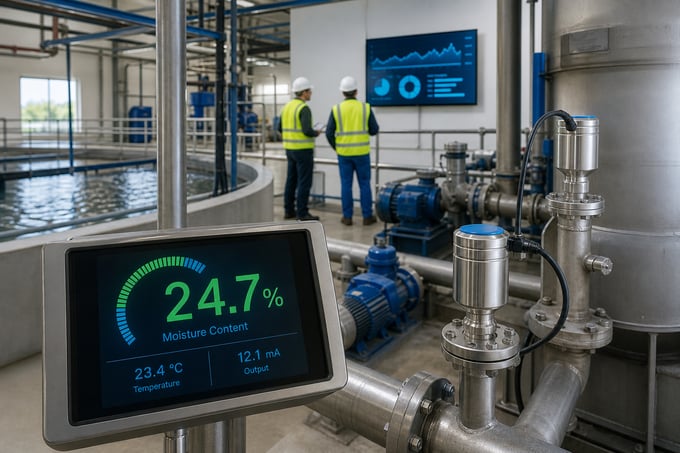
Each of these applications requires specific sensor characteristics and installation considerations. For example, in sludge dewatering, a microwave moisture sensor might be optimal due to its ability to penetrate dense materials and provide accurate readings despite varying consistencies.
Manufacturing Processes
Manufacturing environments rely heavily on moisture sensors for:
Quality Control: Maintaining precise moisture levels in raw materials and finished products Process Optimization: Adjusting production parameters based on real-time moisture data Energy Efficiency: Preventing over-drying and unnecessary energy consumption Regulatory Compliance: Meeting industry-specific moisture content requirements
Selection Criteria for Industrial Moisture Sensors
Technical Considerations
When selecting a moisture sensor for industrial applications, consider these critical factors:
| Factor | Importance | Considerations |
|---|---|---|
| Measurement Range | High | Must match application requirements |
| Response Time | Medium to High | Critical for process control |
| Environmental Conditions | High | Temperature, pressure, chemical exposure |
| Maintenance Requirements | Medium | Calibration frequency, cleaning needs |
Integration and Communication
Modern moisture sensors must seamlessly integrate with existing control systems. Key integration features include:
- 4-20mA output signals for traditional control systems
- Digital communication protocols (Modbus, HART, Ethernet/IP)
- Wireless capabilities for remote monitoring
- Data logging and trend analysis capabilities
Installation and Maintenance Best Practices
Proper installation and maintenance are crucial for optimal moisture sensor performance. Consider these essential practices:
Installation Guidelines
1. Location Selection - Ensure representative sampling - Avoid interference sources - Consider access for maintenance - Account for process flow dynamics
2. Mounting Requirements - Proper orientation - Stable mounting surface - Protection from physical damage - Appropriate clearance for maintenance
Maintenance Schedule
| Task | Frequency | Impact |
|---|---|---|
| Calibration Check | Monthly | Accuracy Maintenance |
| Physical Cleaning | Weekly to Monthly | Reliability |
| Full Calibration | Quarterly to Annually | Performance Optimization |
| Sensor Inspection | Daily to Weekly | Early Problem Detection |
ROI and Performance Metrics
Understanding the return on investment (ROI) for moisture sensor implementation is crucial for justifying the technology investment:
Direct Cost Benefits
- Reduced energy consumption through optimized drying processes - Decreased waste from improved quality control - Lower labor costs through automation - Minimized regulatory compliance issues
Indirect Benefits
- Improved product quality and consistency - Enhanced process control and optimization - Better preventive maintenance scheduling - Increased operational efficiency
Future Trends in Moisture Sensing Technology
The moisture sensor industry continues to evolve with emerging technologies and capabilities:
- AI and Machine Learning Integration
- IoT Connectivity and Remote Monitoring
- Advanced Self-Calibration Features
- Improved Energy Efficiency
Conclusion
Selecting and implementing the right moisture sensor technology is crucial for industrial success. By understanding the various types, applications, and considerations discussed in this guide, you can make informed decisions that optimize your processes and improve your bottom line.
For expert guidance on selecting and implementing moisture sensors in your industrial application, contact RACO Manufacturing & Engineering. Our team of specialists can help you choose the right solution for your specific needs.