

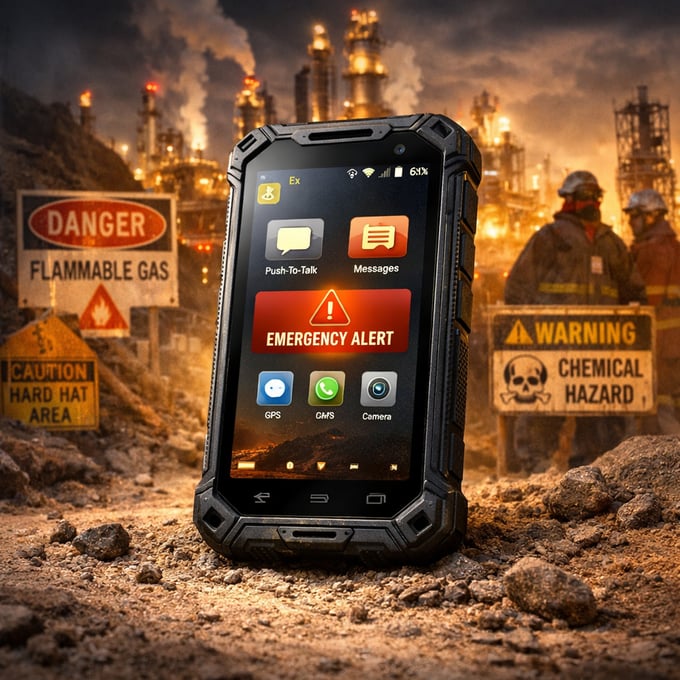
Intrinsically Safe Mobile Phones: The Ultimate Guide to Hazardous Location Communications


Intrinsically Safe Mobile Phones: The Ultimate Guide to Hazardous Location Communications
In hazardous industrial environments where explosive gases, vapors, or dust are present, standard mobile phones pose a significant safety risk. This comprehensive guide explores intrinsically safe mobile phones – specialized devices designed to operate safely in these dangerous environments while maintaining essential communication capabilities.
What Makes a Mobile Phone Intrinsically Safe?
Intrinsically safe mobile phones are engineered to prevent ignition of hazardous atmospheres by limiting electrical and thermal energy to levels that cannot trigger an explosion. These devices incorporate several critical design elements:
| Design Feature | Safety Function |
|---|---|
| Energy-Limiting Circuits | Restricts electrical current and voltage to safe levels |
| Protected Battery Compartments | Prevents spark generation during battery changes |
| Specialized Housing | Protects internal components and prevents static buildup |
| Temperature Control | Maintains surface temperatures below ignition points |
Key Classifications and Certifications
Intrinsically safe mobile phones must meet strict certification requirements based on their intended use environment. Understanding these classifications is crucial for selecting the right device:
Class I, Division 1 (North America)
Suitable for areas where hazardous concentrations of flammable gases, vapors, or liquids exist under normal operating conditions.
ATEX Zone 0/20 (Europe)
Certified for use in areas where an explosive atmosphere is present continuously or for long periods.
IECEx Certification (International)
Meets international standards for equipment used in explosive atmospheres.
Essential Features of Modern Intrinsically Safe Phones
Today's intrinsically safe mobile phones combine safety with functionality, offering features crucial for industrial applications:
Communication Capabilities
- 4G/LTE connectivity for reliable data transmission
- Push-to-talk functionality for instant team communication
- Emergency alert systems for rapid response
Durability Features
These devices are built to withstand harsh industrial environments with:
- IP68 water and dust protection
- Military-grade drop resistance (MIL-STD-810G)
- Chemical-resistant housings
- Extended temperature operation ranges (-20°C to +60°C)
Applications Across Industries
Intrinsically safe mobile phones are essential in various industrial settings:
Oil and Gas
Used in refineries, drilling platforms, and processing facilities where flammable gases are present. These phones enable critical communication while maintaining safety protocols.
Chemical Manufacturing
Essential in facilities handling volatile compounds and during maintenance operations where explosive atmospheres may exist.
Mining Operations
Crucial for underground communications where methane gas and coal dust create potentially explosive environments.
Wastewater Treatment
Necessary in areas where methane and other biogases are present during treatment processes.
Integration with Industrial Control Systems
Modern intrinsically safe phones can integrate with various industrial systems:
| Integration Type | Functionality |
|---|---|
| SCADA Systems | Remote monitoring and control capabilities |
| Alarm Systems | Real-time alert notifications and response coordination |
| Asset Management | Equipment tracking and maintenance scheduling |
Best Practices for Implementation
Successfully implementing intrinsically safe mobile phones requires careful consideration of several factors:
Risk Assessment
Conduct thorough hazard analyses to determine appropriate device classifications for specific areas.
Training Requirements
Develop comprehensive training programs covering:
- Proper device operation and maintenance
- Emergency procedures and protocols
- Understanding hazardous area classifications
Future Trends in Intrinsically Safe Mobile Technology
The field of intrinsically safe mobile phones continues to evolve with emerging technologies:
Enhanced Connectivity
Integration of 5G capabilities while maintaining intrinsic safety standards promises improved data transmission and real-time monitoring capabilities.
Advanced Features
Development of new features including:
- Augmented reality for maintenance support
- Advanced sensor integration for environmental monitoring
- Improved battery technology for longer operation
Making the Right Choice
When selecting intrinsically safe mobile phones, consider these key factors:
| Factor | Consideration |
|---|---|
| Certification Level | Must match or exceed area classification requirements |
| Battery Life | Should last full shift under typical usage |
| Network Compatibility | Must work with existing communication infrastructure |
| Support Services | Availability of maintenance and repair services |
Conclusion
Intrinsically safe mobile phones are crucial tools in hazardous industrial environments, combining essential communication capabilities with rigorous safety standards. As technology advances, these devices continue to evolve, offering improved functionality while maintaining the highest safety levels. Understanding their specifications, applications, and implementation requirements is essential for maintaining safe and efficient operations in hazardous locations.
For more information about implementing safe communication solutions in hazardous environments, contact RACO Manufacturing & Engineering's expert team or explore our range of industrial communication solutions.