

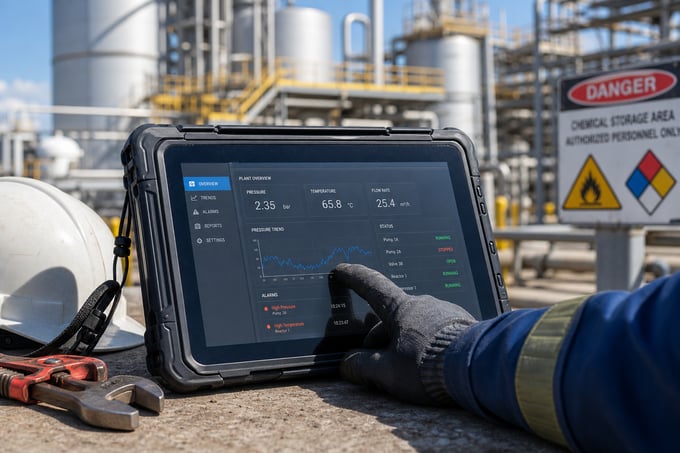
Intrinsically Safe Tablets: The Complete Guide for Hazardous Location Computing [2024]


Intrinsically Safe Tablets: The Complete Guide for Hazardous Location Computing [2024]
In hazardous environments where explosive gases, vapors, or dust are present, standard electronic devices pose significant risks. This comprehensive guide explores intrinsically safe tablets – specialized mobile computing devices designed to operate safely in potentially explosive atmospheres. Whether you're managing a wastewater treatment facility, chemical plant, or oil and gas operation, understanding these essential tools is crucial for maintaining both safety and productivity.
What Makes a Tablet Intrinsically Safe?
An intrinsically safe tablet is specifically engineered to prevent the release of sufficient electrical or thermal energy that could ignite a hazardous atmospheric mixture. These devices incorporate several key design elements:
| Safety Feature | Purpose |
|---|---|
| Energy Limitation Circuits | Restricts electrical energy to levels below ignition thresholds |
| Sealed Enclosures | Prevents hazardous gases from entering device components |
| Temperature Control | Maintains surface temperatures below ignition points |
| Protected Connections | Ensures all electrical connections remain spark-free |
Key Applications for Intrinsically Safe Tablets
These specialized devices find essential applications across various industries:
Wastewater Treatment Operations
In wastewater facilities, operators use intrinsically safe tablets to:
- Monitor SCADA systems safely in areas with methane presence - Access digital maintenance records near treatment processes - Document inspections in potentially hazardous zones - Control automated systems in classified areasOil and Gas Industry
Petroleum operations rely on these devices for:
- Well monitoring and data collection - Pipeline inspection documentation - Equipment maintenance tracking - Real-time process control in hazardous zonesCertification Standards and Classifications
When selecting an intrinsically safe tablet, understanding certification requirements is crucial. The most important standards include:
| Certification | Description | Application |
|---|---|---|
| Class I, Division 1 | Highest level of protection for areas where hazardous concentrations are present during normal operations | Chemical processing areas, fuel storage |
| Class I, Division 2 | For areas where hazardous concentrations are present only in abnormal conditions | Wastewater treatment, manufacturing |
| ATEX Zone 0/1/2 | European standard for explosive atmospheres | Global operations requiring EU compliance |
Essential Features of Modern Intrinsically Safe Tablets
Today's intrinsically safe tablets combine safety with advanced functionality:
Hardware Specifications
- Rugged construction for industrial environments
- High-brightness displays for outdoor visibility
- Extended battery life for long operational periods
- Glove-compatible touchscreens
Software Capabilities
- SCADA system integration
- Asset management software compatibility
- Real-time data collection and analysis
- Remote monitoring capabilities
Integration with SCADA and Alarm Systems
Modern intrinsically safe tablets serve as mobile extensions of plant control systems. When integrated with SCADA systems like RACO's Catalyst, these devices enable:
- Real-time alarm monitoring and acknowledgment
- Remote system control and adjustment
- Historical data access and trending
- Maintenance scheduling and tracking
Best Practices for Deployment and Maintenance
To maximize the effectiveness and longevity of intrinsically safe tablets:
Implementation Guidelines
1. Conduct thorough hazardous area assessments 2. Develop clear usage protocols 3. Provide comprehensive operator training 4. Establish charging and maintenance zones
Maintenance Requirements
1. Regular inspection of seals and enclosures 2. Certification validation and updates 3. Software and firmware maintenance 4. Battery replacement according to manufacturer specifications
Cost Considerations and ROI
While intrinsically safe tablets represent a significant investment, their value proposition includes:
| Benefit | Impact |
|---|---|
| Improved Safety | Reduced risk of accidents and regulatory compliance |
| Enhanced Efficiency | Streamlined operations and reduced downtime |
| Data Accuracy | Better decision-making and reporting |
| Operational Flexibility | Mobile access to critical systems and information |
Future Trends in Intrinsically Safe Computing
The field of intrinsically safe mobile computing continues to evolve with emerging technologies:
- 5G connectivity for faster data transmission - Enhanced AR/VR capabilities for maintenance support - Improved battery technology for longer operation - Advanced sensor integration for environmental monitoringConclusion
Intrinsically safe tablets represent a crucial intersection of safety and functionality in hazardous environments. As industrial operations become increasingly digitized, these devices provide essential mobile computing capabilities while maintaining the highest safety standards. When selecting and implementing intrinsically safe tablets, consider your specific application requirements, certification needs, and integration capabilities with existing systems.
For more information about integrating intrinsically safe tablets with your facility's monitoring and control systems, contact RACO Manufacturing & Engineering's experts or explore our Catalyst SCADA solution.