

J Type Thermocouple: The Complete Guide to Industrial Temperature Measurement


J Type Thermocouple: The Complete Guide to Industrial Temperature Measurement
When it comes to reliable temperature measurement in industrial settings, the J type thermocouple stands as a cornerstone of process monitoring and control. As a widely used temperature sensor in wastewater treatment, manufacturing, and various industrial applications, understanding its capabilities and limitations is crucial for maintaining efficient operations.
What is a J Type Thermocouple?
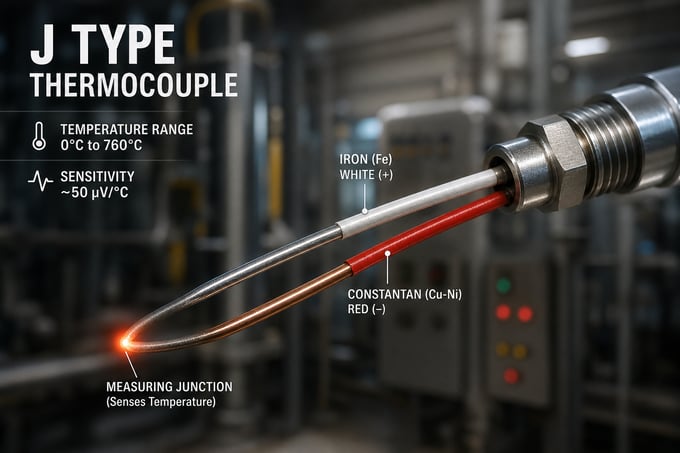
A J type thermocouple consists of two distinct wire materials: iron (Fe) and constantan (Cu-Ni alloy). When these metals are joined at one end, they create a temperature-sensitive junction that generates a voltage proportional to the temperature difference between the measuring and reference junctions. This phenomenon, known as the Seebeck effect, makes thermocouples invaluable for industrial temperature measurement.
| Specification | Details |
|---|---|
| Temperature Range | 0°C to 760°C (32°F to 1,400°F) |
| Sensitivity | ~50 µV/°C |
| Wire Materials | Iron (+) / Constantan (-) |
| Color Code (US) | White (+) / Red (-) |
Key Advantages of J Type Thermocouples
J type thermocouples offer several distinct advantages that make them particularly suitable for industrial applications:
1. Cost-Effectiveness
Compared to other thermocouple types, J type sensors are generally more economical to manufacture and replace, making them an attractive option for large-scale industrial deployments.
2. High Sensitivity
With a sensitivity of approximately 50 microvolts per degree Celsius, J type thermocouples provide excellent resolution for precise temperature measurements in their operating range.
3. Quick Response Time
These sensors respond rapidly to temperature changes, making them ideal for applications requiring real-time monitoring and control.
Common Applications in Industry
Wastewater Treatment
In wastewater treatment facilities, J type thermocouples play a crucial role in monitoring:
- Digester temperatures for optimal bacterial activity
- Heat exchanger efficiency
- Sludge processing temperatures
Manufacturing Processes
The manufacturing sector relies heavily on J type thermocouples for:
- Plastic injection molding temperature control
- Heat treating operations
- Equipment monitoring
Integration with Control Systems
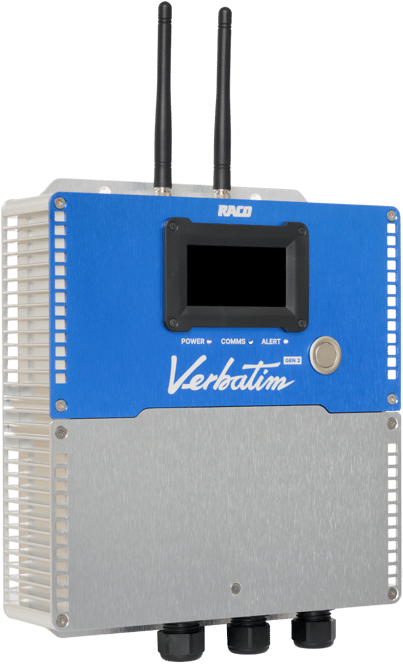
Modern industrial control systems require reliable temperature data for automated process control. RACO Manufacturing & Engineering's alarm autodialers and remote monitoring systems seamlessly integrate with J type thermocouples to provide:
- Real-time temperature monitoring
- Automated alarm notifications when temperatures exceed preset thresholds
- Data logging for regulatory compliance and process optimization
Installation and Maintenance Best Practices
Proper installation and maintenance are crucial for optimal performance:
Installation Guidelines
1. Ensure proper wire polarity (white wire positive, red wire negative)
2. Use appropriate extension wire for connections to monitoring equipment
3. Install protection tubes in corrosive environments
4. Maintain minimum insertion length for accurate readings
Maintenance Requirements
Regular maintenance should include:
1. Periodic calibration checks
2. Inspection for physical damage or corrosion
3. Verification of connection integrity
4. Documentation of calibration and maintenance activities
Troubleshooting Common Issues
| Problem | Possible Cause | Solution |
|---|---|---|
| Erratic Readings | Loose Connections | Check and tighten all connections |
| No Output | Broken Wire/Junction | Replace thermocouple |
| Drift in Readings | Contamination/Aging | Calibrate or replace sensor |
Selecting the Right J Type Thermocouple
When choosing a J type thermocouple, consider these factors:
Environmental Considerations
1. Temperature range requirements
2. Exposure to corrosive substances
3. Mechanical stress factors
4. Ambient conditions
Application Requirements
1. Response time needs
2. Accuracy requirements
3. Physical size constraints
4. Integration with existing systems
Future Trends and Developments
The future of J type thermocouples includes:
1. Smart sensors with built-in diagnostics
2. Wireless connectivity options
3. Enhanced durability through new materials
4. Integration with Industrial Internet of Things (IIoT) platforms
Conclusion
J type thermocouples remain a fundamental component in industrial temperature measurement, offering reliability, cost-effectiveness, and versatility. When properly selected, installed, and maintained, these sensors provide accurate temperature monitoring essential for process control and safety. By integrating them with modern monitoring systems like RACO's solutions, industries can achieve optimal process control and regulatory compliance.
Recommended Internal Links:
- temperature monitoring systems
- industrial alarm systems
- remote monitoring solutions
- wastewater treatment monitoring
- process control systems