


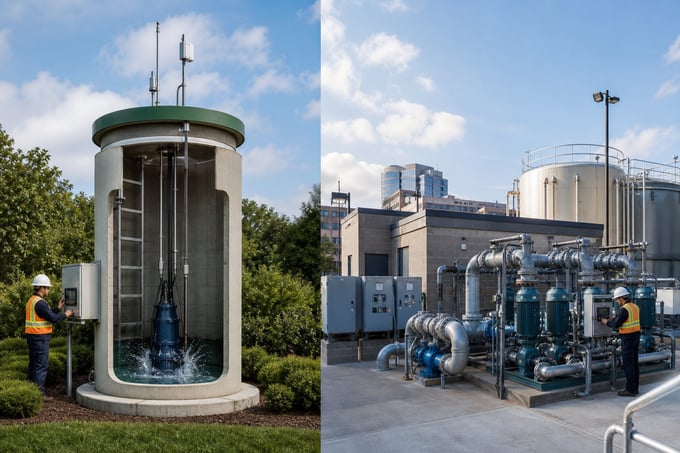
Lift Station vs Pump Station: Understanding Key Differences in Wastewater Management


Lift Station vs Pump Station: Understanding Key Differences in Wastewater Management
In the world of wastewater management, the terms "lift station" and "pump station" are often used interchangeably, leading to confusion among facility managers, engineers, and municipalities. While both systems play crucial roles in moving water and wastewater, understanding their distinct characteristics and applications is essential for making informed infrastructure decisions.
Key Differences Between Lift Stations and Pump Stations
The primary distinction between lift stations and pump stations lies in their specific applications and design characteristics. Let's explore these differences in detail:
| Characteristic | Lift Station | Pump Station |
|---|---|---|
| Primary Purpose | Move wastewater from lower to higher elevation | Transfer various types of water across distances |
| Typical Application | Sewage and wastewater systems | Multiple water types (storm, drinking, industrial) |
| Design Complexity | More specialized components | Can be simpler in design |
| Maintenance Requirements | Higher due to solid content | Varies based on application |
Understanding Lift Stations in Detail
Lift stations are specialized pumping facilities designed specifically for wastewater applications. They serve a critical function in municipal infrastructure by moving sewage from lower to higher elevations when gravity flow is not feasible.
Key Components of a Lift Station
A typical lift station consists of several essential components:
- Wet Well: A concrete or fiberglass basin that collects incoming wastewater
- Submersible Pumps: Specially designed to handle solids and debris in wastewater
- Control System: Automated monitoring and control equipment for pump operation
- Alarm Systems: Alert mechanisms for system failures or abnormal conditions
Monitoring and Control Requirements
Modern lift stations require sophisticated monitoring and control systems to ensure reliable operation. RACO Manufacturing & Engineering's Verbatim alarm auto dialers and remote monitoring systems play a crucial role in maintaining lift station efficiency and preventing costly overflow events.
Pump Stations: Versatility in Water Management
Pump stations serve a broader range of applications compared to lift stations. They can be found in various settings, from municipal water distribution to industrial processes.
Applications of Pump Stations
Pump stations are utilized in numerous scenarios:
- Drinking water distribution networks
- Stormwater management systems
- Industrial water transfer operations
- Agricultural irrigation systems
Making the Right Choice: Lift Station or Pump Station?
When deciding between a lift station and a pump station, consider these factors:
Application Requirements
The nature of the fluid being transported is the primary consideration. If you're dealing with raw sewage or wastewater containing solids, a lift station is typically the appropriate choice. For clean water or industrial applications, a pump station might be more suitable.
Cost Considerations
Initial investment and long-term operational costs vary between the two systems:
| Cost Factor | Lift Station | Pump Station |
|---|---|---|
| Initial Investment | Higher due to specialized equipment | Generally lower |
| Maintenance Costs | Higher due to waste handling | Lower for clean water applications |
| Operating Costs | Higher energy requirements | Varies by application |
Monitoring and Maintenance Best Practices
Regardless of the system type, proper monitoring and maintenance are crucial for optimal performance. Remote monitoring solutions from RACO provide real-time insights into system operation, helping prevent failures and optimize performance.
Essential Monitoring Parameters
Key parameters to monitor include:
- Pump run times and cycles
- Flow rates and volumes
- Power consumption
- Alarm conditions
- Equipment status
Future Trends in Pumping Station Technology
The future of both lift stations and pump stations is being shaped by emerging technologies:
- Smart Monitoring: Integration of IoT sensors and real-time analytics
- Energy Efficiency: Advanced pump designs and control strategies
- Predictive Maintenance: AI-driven maintenance scheduling
- Remote Operation: Enhanced capabilities for remote control and monitoring
Conclusion
While lift stations and pump stations share some common elements, their distinct characteristics make them suitable for different applications. Understanding these differences is crucial for making informed decisions in water management infrastructure. Whether you choose a lift station or a pump station, implementing proper monitoring and control systems, such as RACO's advanced monitoring solutions, is essential for reliable operation and maintenance.
Recommended Internal Links:
- Wastewater monitoring systems
- Remote monitoring solutions
- Pump station alarms
- SCADA systems
- Auto dialers for utilities


