

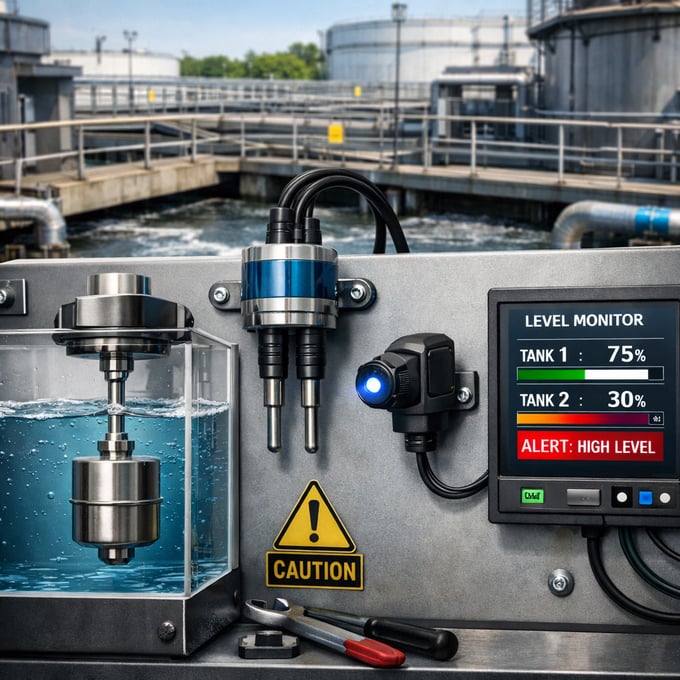
Liquid Level Switches: The Complete Guide to Selection, Installation, and Maintenance


Liquid Level Switches: The Complete Guide to Selection, Installation, and Maintenance
In industrial processes and municipal water management, reliable liquid level monitoring is crucial for operational efficiency and safety. Liquid level switches serve as the frontline defenders against overflow conditions, pump damage, and process disruptions. This comprehensive guide will help you understand everything you need to know about these essential components of liquid management systems.
What Are Liquid Level Switches?
Liquid level switches are devices designed to detect and respond to specific liquid levels in tanks, vessels, or other containers. These instruments provide binary (on/off) signals when liquids reach predetermined levels, triggering automated responses or alerts to maintain safe and efficient operations.
Types of Liquid Level Switches
Float Switches
Float switches are among the most common and reliable types of level switches. They operate using a simple mechanical principle: a buoyant element rises or falls with the liquid level, triggering a switch mechanism. These switches are particularly effective in:
- Wastewater lift stations
- Sump pump applications
- Chemical storage tanks
- Water treatment facilities
Conductivity Level Switches
These switches utilize the electrical conductivity of liquids to detect levels. They're ideal for:
- Conductive liquids like water
- Applications requiring no moving parts
- Environments with limited space
Optical Level Switches
Using light refraction principles, optical switches offer precise level detection without direct contact with the medium. They excel in:
- Clean liquid applications
- High-pressure environments
- Sanitary processes
| Switch Type | Advantages | Limitations |
|---|---|---|
| Float | Simple, reliable, cost-effective | Moving parts can wear |
| Conductivity | No moving parts, compact | Limited to conductive liquids |
| Optical | Non-contact, precise | Higher cost, sensitive to coating |
Key Applications of Liquid Level Switches
Liquid level switches play vital roles across numerous industries and applications:
Wastewater Management
In wastewater treatment facilities, level switches are crucial for:
- Controlling pump operations in lift stations
- Preventing overflow conditions
- Maintaining optimal treatment tank levels
- Triggering high-level alarms
Industrial Processing
Manufacturing facilities rely on level switches for:
- Chemical storage monitoring
- Process tank level control
- Equipment protection
- Safety shutdown systems
Selection Criteria for Liquid Level Switches
Choosing the right level switch requires careful consideration of several factors:
Process Conditions
Consider these critical parameters:
- Temperature range
- Pressure requirements
- Chemical compatibility
- Viscosity of the medium
Environmental Factors
Evaluate the installation environment for:
- Explosion hazards (requiring intrinsically safe options)
- Corrosive atmospheres
- Weather exposure
- Vibration levels
Installation Best Practices
Proper installation ensures optimal performance and longevity of liquid level switches:
Mounting Considerations
Follow these guidelines for successful installation:
- Ensure proper clearance from tank walls
- Account for liquid turbulence
- Consider access for maintenance
- Protect cables and connections
Maintenance and Troubleshooting
Regular maintenance is essential for reliable operation:
Preventive Maintenance Schedule
| Task | Frequency | Purpose |
|---|---|---|
| Visual inspection | Monthly | Check for damage or wear |
| Function testing | Quarterly | Verify proper operation |
| Cleaning | As needed | Remove buildup or deposits |
Integration with Control Systems
Modern liquid level switches can interface with various control systems:
- SCADA systems
- PLC controllers
- Remote monitoring solutions
- Alarm notification systems
Safety Considerations
Safety should always be a priority when working with liquid level switches:
- Follow lockout/tagout procedures during maintenance
- Use appropriate personal protective equipment
- Ensure proper grounding and electrical safety
- Maintain documentation of safety procedures
Future Trends in Level Switch Technology
The field of level detection continues to evolve with:
- Smart sensors with self-diagnostic capabilities
- Wireless communication options
- Integration with Industrial IoT platforms
- Enhanced reliability and durability
Conclusion
Liquid level switches are fundamental components in modern fluid management systems. Understanding their types, applications, and maintenance requirements is crucial for optimal performance and reliability. Whether you're managing a wastewater treatment facility or overseeing industrial processes, selecting and maintaining the right level switch can significantly impact your operation's efficiency and safety.
For expert guidance on selecting and implementing liquid level switches for your specific application, contact RACO Manufacturing & Engineering. Our team of specialists can help you choose the right solution for your needs.
Recommended Internal Links:
- Wastewater monitoring systems
- SCADA systems
- Remote monitoring solutions
- Alarm notification systems
- Industrial automation