


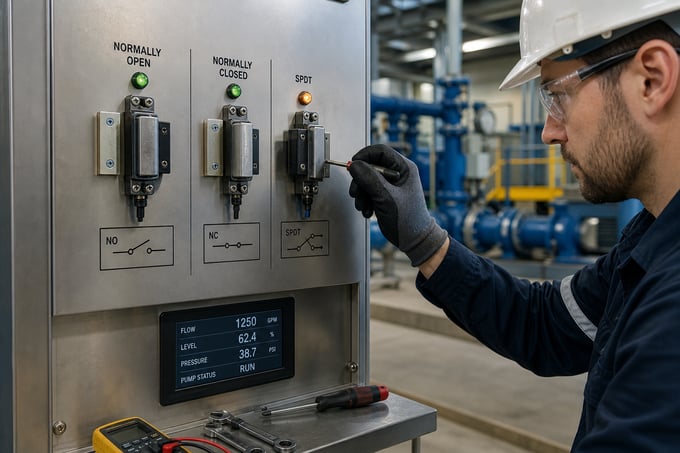
Magnetic Contact Switch: The Complete Guide to Industrial Applications & Selection


Magnetic Contact Switch: The Complete Guide to Industrial Applications & Selection
In industrial automation and security applications, magnetic contact switches play a crucial role in monitoring door positions, hatch status, and equipment alignment. As a fundamental component in many control and security systems, understanding how these devices work and selecting the right one for your application is essential for maintaining operational efficiency and safety.
What is a Magnetic Contact Switch?
A magnetic contact switch, also known as a magnetic reed switch, is a sensor consisting of two main components: a switch mechanism containing reed contacts and a separate magnet. When the magnet comes within the specified operating distance of the switch, it causes the reed contacts to either open or close, depending on the switch design. This simple yet reliable mechanism makes magnetic contact switches ideal for non-contact position sensing in various industrial applications.
Types of Magnetic Contact Switches
Understanding the different types of magnetic contact switches is crucial for selecting the right solution for your application:
| Type | Description | Common Applications |
|---|---|---|
| Normally Open (NO) | Contacts are open until magnet is present | Door monitoring, safety interlocking |
| Normally Closed (NC) | Contacts are closed until magnet is present | Security systems, tamper detection |
| SPDT (Form C) | Combines NO and NC contacts | Complex control systems, redundant monitoring |
Key Applications in Industrial Settings
Magnetic contact switches serve various critical functions across industrial environments:
1. Water and Wastewater Treatment
In water and wastewater facilities, magnetic contact switches are essential for:
- Monitoring access hatches on treatment tanks - Verifying valve positions - Ensuring proper alignment of maintenance covers - Detecting unauthorized access to sensitive areas2. Manufacturing and Production
Manufacturing applications include:
- Safety interlock systems on equipment guards - Position verification on automated assembly lines - Material handling system monitoring - Quality control verification points3. Security and Access Control
Security applications leverage magnetic contact switches for:
- Perimeter security monitoring - Equipment room access control - Emergency exit monitoring - Restricted area protectionSelection Criteria for Magnetic Contact Switches
When selecting a magnetic contact switch for your application, consider these critical factors:
Environmental Considerations
Industrial environments often present challenging conditions that affect switch performance:
| Factor | Consideration | Solution |
|---|---|---|
| Temperature | Operating range requirements | Select switches rated for extreme temperatures |
| Moisture | Exposure to water or humidity | Use hermetically sealed switches with appropriate IP ratings |
| Corrosive Elements | Chemical exposure risks | Choose corrosion-resistant materials and enclosures |
Electrical Specifications
Understanding electrical requirements ensures reliable operation:
- Switching voltage and current ratings - Contact resistance specifications - Breakdown voltage requirements - Switching speed requirementsInstallation Best Practices
Proper installation is crucial for optimal performance and longevity of magnetic contact switches:
Mounting Considerations
Follow these guidelines for successful installation:
1. Maintain proper alignment between switch and magnet 2. Observe maximum operating distance specifications 3. Use appropriate mounting hardware for the environment 4. Consider magnetic interference from nearby equipmentWiring Requirements
Ensure reliable operation with proper wiring practices:
1. Use appropriate cable types for the environment 2. Implement proper strain relief 3. Follow manufacturer's recommendations for cable routing 4. Include appropriate surge protection where necessaryMaintenance and Troubleshooting
Regular maintenance ensures long-term reliability:
Preventive Maintenance
Implement these maintenance practices:
- Regular visual inspections - Periodic operational testing - Cleaning of switch and magnet surfaces - Documentation of maintenance activitiesCommon Issues and Solutions
| Problem | Possible Cause | Solution |
|---|---|---|
| False Triggering | Misalignment or interference | Realign components, check for magnetic interference |
| No Operation | Excessive gap or damage | Verify operating distance, inspect for physical damage |
| Intermittent Operation | Loose connections or contamination | Check wiring, clean components |
Integration with Control Systems
Magnetic contact switches often interface with larger control systems:
Common Integration Points
- PLC inputs for process control - SCADA systems for monitoring - Security systems for access control - Building automation systemsCommunication Protocols
Switches may interface with various protocols:
- Direct digital inputs - Industrial fieldbus networks - Wireless monitoring systems - IoT-enabled monitoring platformsSafety and Compliance
Ensure your installation meets relevant standards:
- UL/CSA certifications for hazardous locations - IP ratings for environmental protection - NEMA ratings for enclosures - Industry-specific compliance requirementsConclusion
Magnetic contact switches are essential components in industrial automation and security applications. By understanding their types, applications, and selection criteria, you can choose the right switch for your specific needs. Proper installation, maintenance, and integration ensure reliable operation and long service life.
For expert guidance on selecting and implementing magnetic contact switches in your industrial application, contact RACO Manufacturing & Engineering. Our team of specialists can help you choose the right solution for your specific requirements.


