

Magnetic Door Switches: The Complete Guide to Industrial Security & Monitoring


Magnetic Door Switches: The Complete Guide to Industrial Security & Monitoring
In the world of industrial security and monitoring, magnetic door switches play a crucial yet often overlooked role in protecting facilities and ensuring operational safety. These deceptively simple devices form the backbone of many security systems, providing reliable door position monitoring and integration with various alarm and control systems.
What Are Magnetic Door Switches?
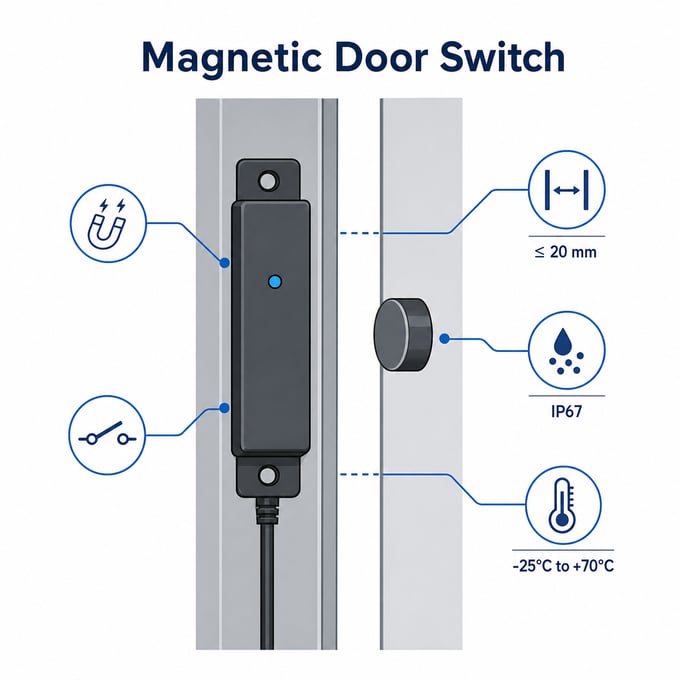
Magnetic door switches, also known as magnetic contact switches or door contacts, are security devices consisting of two main components: a switch mechanism and a magnet. When properly installed, these components work together to monitor door position and trigger responses when unauthorized access occurs.
| Component | Function |
|---|---|
| Reed Switch | Contains electrical contacts that respond to magnetic fields |
| Magnet | Creates magnetic field to maintain switch position |
| Housing | Protects internal components and facilitates mounting |
How Magnetic Door Switches Work
The operating principle behind magnetic door switches is elegantly simple yet highly effective. When the door is closed, the magnet and switch are aligned, keeping the circuit in its normal state. Opening the door separates these components, triggering the switch and signaling a change in door status.
Key Operating Characteristics:
1. Normally Open (NO) vs. Normally Closed (NC) Configuration - NO switches complete the circuit when the magnet is present - NC switches break the circuit when the magnet is removed - Selection depends on specific application requirements
2. Gap Distance Specifications - Maximum operating gap between switch and magnet - Minimum release distance - These measurements are crucial for proper installation
Applications in Industrial Settings
Magnetic door switches serve multiple purposes in industrial environments, extending far beyond simple security applications. Their versatility makes them invaluable in various monitoring scenarios.
Common Industrial Applications:
| Application | Purpose | Benefits |
|---|---|---|
| Security Monitoring | Detect unauthorized access | Enhanced facility protection |
| Process Control | Monitor equipment status | Improved operational efficiency |
| Safety Systems | Ensure proper door closure | Enhanced workplace safety |
Integration with Control Systems
Modern magnetic door switches can integrate seamlessly with various control and monitoring systems, enhancing their utility in industrial applications. This integration capability makes them essential components in comprehensive facility management solutions.
Compatible Systems:
- SCADA Systems - Building Management Systems (BMS) - Security Alarm Systems - Access Control Systems - Industrial Automation Systems
Selection Criteria for Industrial Applications
Choosing the right magnetic door switch requires careful consideration of several factors to ensure optimal performance and reliability in industrial environments.
| Factor | Considerations |
|---|---|
| Environmental Conditions | Temperature range, moisture exposure, chemical presence |
| Mounting Requirements | Surface material, space constraints, aesthetic considerations |
| Electrical Specifications | Voltage requirements, current ratings, switching capacity |
| Security Level | Tamper resistance, supervision requirements, certification needs |
Installation Best Practices
Proper installation is crucial for reliable operation of magnetic door switches. Following these best practices ensures optimal performance and longevity:
Installation Guidelines:
1. Location Selection - Mount on the secure side of the door - Position away from magnetic interference sources - Consider environmental factors
2. Alignment Requirements - Ensure proper spacing between switch and magnet - Maintain parallel alignment - Account for door movement patterns
3. Wiring Considerations - Use appropriate cable type and gauge - Protect wiring from physical damage - Implement proper grounding practices
Maintenance and Troubleshooting
Regular maintenance and prompt troubleshooting are essential for maintaining the reliability of magnetic door switches in industrial applications.
Maintenance Schedule:
| Task | Frequency | Purpose |
|---|---|---|
| Visual Inspection | Monthly | Check for physical damage |
| Alignment Check | Quarterly | Verify proper positioning |
| Operation Test | Semi-annually | Confirm proper functioning |
Future Trends and Innovations
The evolution of magnetic door switch technology continues to bring new capabilities and improved performance to industrial applications. Understanding these trends helps in making future-proof selection decisions.
Emerging Technologies:
- Wireless connectivity options - Enhanced tamper detection features - Integration with IoT platforms - Advanced diagnostic capabilities - Smart monitoring features
Conclusion
Magnetic door switches remain fundamental components in industrial security and monitoring applications. Their reliability, versatility, and ease of integration make them indispensable in modern facility management systems. By understanding their operation, selection criteria, and proper implementation, organizations can maximize the benefits of these essential devices.
For expert guidance on selecting and implementing magnetic door switches in your industrial application, contact RACO Manufacturing & Engineering. Our team of specialists can help you choose the right solution for your specific needs.