

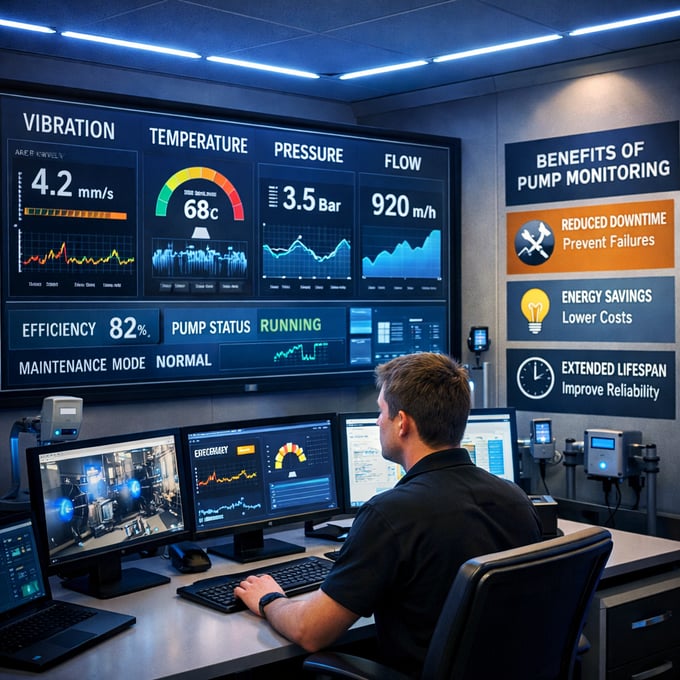
Pump Monitoring Systems: The Complete Guide to Optimal Performance & Efficiency


Pump Monitoring Systems: The Complete Guide to Optimal Performance & Efficiency
In the world of water and wastewater management, pump monitoring stands as the cornerstone of efficient operations. With municipalities facing increasing pressure to reduce costs and improve reliability, understanding and implementing effective pump monitoring solutions has never been more critical. This comprehensive guide explores how modern pump monitoring systems are revolutionizing operations, reducing downtime, and saving significant resources.
Understanding Pump Monitoring Systems
Pump monitoring involves the continuous observation and analysis of pump performance parameters to ensure optimal operation and prevent failures. Modern systems combine sophisticated sensors, data analytics, and remote monitoring capabilities to provide real-time insights into pump health and performance.
Key Components of Pump Monitoring Systems
| Component | Function | Benefits |
|---|---|---|
| Sensors | Measure vibration, temperature, pressure, and flow | Early detection of mechanical issues |
| Data Loggers | Record and store performance metrics | Historical analysis and trend identification |
| Communication Systems | Transmit data to monitoring stations | Real-time alerts and remote access |
| Analytics Software | Process and analyze collected data | Predictive maintenance insights |
Critical Parameters in Pump Monitoring
Effective pump monitoring requires tracking several crucial parameters that indicate system health and performance. Understanding these metrics helps operators maintain optimal efficiency and prevent catastrophic failures.
Essential Monitoring Parameters
- Vibration Analysis: Detects mechanical issues, bearing problems, and misalignment
Vibration monitoring serves as an early warning system for mechanical problems. Advanced sensors can detect subtle changes in vibration patterns that might indicate developing issues before they cause system failure.
- Temperature Monitoring: Identifies overheating and bearing problems
Temperature sensors placed at critical points help identify potential overheating issues that could lead to pump failure or reduced efficiency.
- Pressure Monitoring: Ensures proper system operation and prevents cavitation
Continuous pressure monitoring helps maintain optimal system performance and prevents dangerous conditions that could damage equipment.
Benefits of Advanced Pump Monitoring Solutions
Implementing comprehensive pump monitoring systems delivers numerous advantages that justify the investment. Modern solutions combine multiple monitoring technologies to provide a complete picture of pump health and performance.
Key Advantages
| Benefit | Impact | ROI Factor |
|---|---|---|
| Reduced Downtime | Up to 70% reduction in unexpected failures | High |
| Energy Savings | 10-20% reduction in energy consumption | Medium |
| Extended Equipment Life | 25-30% increase in pump lifespan | High |
| Lower Maintenance Costs | 15-25% reduction in maintenance expenses | Medium |
Remote Monitoring and Automation
Modern pump monitoring systems leverage remote monitoring capabilities and automation to enhance operational efficiency. These features allow operators to maintain oversight of multiple systems from a central location while reducing manual intervention requirements.
Advanced Remote Monitoring Features
Today's remote monitoring solutions offer sophisticated capabilities that transform how facilities manage their pumping systems:
- Real-time Alerts
Instant notifications about system anomalies allow rapid response to potential issues before they escalate into major problems.
- Data Analytics
Advanced analytics platforms process monitoring data to identify patterns and predict potential failures before they occur.
- Mobile Access
Secure mobile applications provide operators with system status updates and control capabilities from anywhere.
Implementing an Effective Pump Monitoring Strategy
Successfully implementing a pump monitoring system requires careful planning and consideration of several key factors. The following framework helps ensure optimal results:
Implementation Steps
- Assessment
Evaluate current system requirements and identify critical monitoring points.
- Technology Selection
Choose appropriate monitoring technologies based on system needs and budget constraints.
- Installation and Integration
Properly install sensors and integrate monitoring systems with existing infrastructure.
- Training and Documentation
Ensure staff are properly trained on system operation and maintenance procedures.
Future Trends in Pump Monitoring
The field of pump monitoring continues to evolve with emerging technologies and capabilities. Understanding these trends helps facilities prepare for future developments:
| Trend | Description | Expected Impact |
|---|---|---|
| AI Integration | Machine learning for enhanced predictive capabilities | High |
| IoT Expansion | Increased connectivity and data collection | Medium |
| Edge Computing | Improved local processing and response times | Medium |
Conclusion
Effective pump monitoring represents a critical investment in operational efficiency and reliability. By implementing comprehensive monitoring solutions, facilities can significantly reduce downtime, lower maintenance costs, and extend equipment life. As technology continues to advance, the capabilities and benefits of pump monitoring systems will only increase, making them an essential component of modern water and wastewater management operations.
Recommended internal links for this article:
- Predictive Maintenance Systems
- SCADA Systems
- Remote Monitoring Solutions
- Wastewater Pump Station Automation
- Energy Efficiency in Pumping Systems