


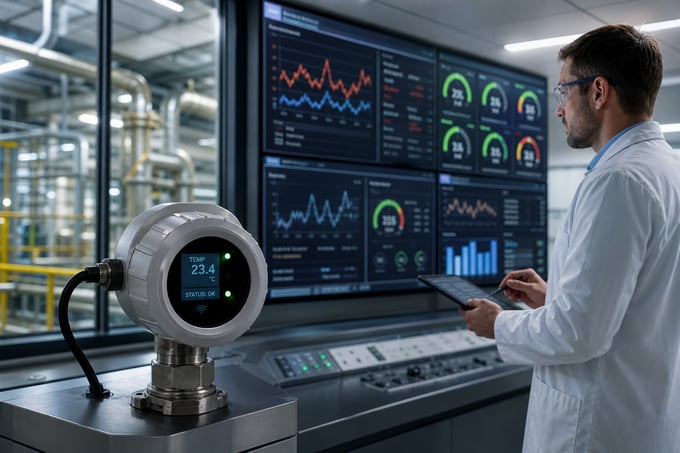
Remote Temperature Monitoring Systems: A Comprehensive Guide for Industrial Applications


Remote Temperature Monitoring Systems: A Comprehensive Guide for Industrial Applications
Temperature monitoring remains a critical aspect of numerous industrial processes, from wastewater treatment to pharmaceutical manufacturing. As facilities become increasingly automated and efficiency-focused, remote temperature monitoring systems have emerged as essential tools for maintaining operational excellence and ensuring regulatory compliance. This comprehensive guide explores everything you need to know about implementing and maximizing the benefits of remote temperature monitoring solutions.
Understanding Remote Temperature Monitoring Systems
Remote temperature monitoring systems consist of sophisticated sensors, data transmission equipment, and monitoring software that work together to provide real-time temperature data from any location. These systems eliminate the need for manual temperature checks, reducing labor costs while improving accuracy and reliability.
Key Components of Remote Temperature Monitoring
| Component | Function |
|---|---|
| Temperature Sensors | Convert temperature readings into electrical signals |
| Data Loggers | Record and store temperature measurements |
| Communication Module | Transmits data to central monitoring system |
| Monitoring Software | Displays and analyzes temperature data |
| Alert System | Notifies personnel of temperature anomalies |
Applications Across Industries
Remote temperature monitoring systems find essential applications across various industries, each with unique requirements and challenges:
Wastewater Treatment
In wastewater treatment facilities, temperature monitoring plays a crucial role in biological treatment processes. Maintaining optimal temperatures ensures efficient bacterial activity for breaking down organic matter. Remote monitoring systems help operators maintain ideal conditions without constant physical presence at multiple locations throughout the facility.
Food and Beverage
Temperature control is critical for food safety and quality. Remote monitoring systems help maintain proper storage temperatures and provide documentation for regulatory compliance. These systems can monitor multiple storage areas simultaneously, ensuring product safety throughout the supply chain.
Pharmaceutical Manufacturing
Precise temperature control is essential for pharmaceutical manufacturing and storage. Remote monitoring systems provide continuous documentation of environmental conditions, supporting GMP compliance and product quality.
Benefits of Remote Temperature Monitoring
Operational Efficiency
Remote temperature monitoring systems dramatically improve operational efficiency through:
- Automated data collection and recording
- Reduced manual inspection requirements
- Real-time monitoring capabilities
- Immediate alert notifications
Cost Savings
Organizations implementing remote temperature monitoring typically experience significant cost reductions through:
- Lower labor costs for manual monitoring
- Reduced product loss due to temperature excursions
- Decreased energy consumption through optimized temperature control
- Minimized equipment maintenance costs
Selecting the Right Remote Temperature Monitoring System
When choosing a remote temperature monitoring system, consider these crucial factors:
Accuracy Requirements
Different applications require varying levels of accuracy. For instance, pharmaceutical storage might require ±0.5°C accuracy, while general industrial processes might accept ±2°C variance. Understanding your specific needs helps select appropriate sensors and monitoring equipment.
Communication Options
Modern remote temperature monitoring systems offer various communication methods:
| Method | Advantages | Best For |
|---|---|---|
| Cellular | Wide coverage, no local network needed | Remote locations |
| Wi-Fi | Cost-effective, easy integration | Local facilities with existing networks |
| LoRaWAN | Long-range, low power consumption | Large industrial complexes |
Implementation Best Practices
Successful implementation of remote temperature monitoring systems requires careful planning and execution:
System Setup
Proper installation and configuration ensure optimal system performance:
- Conduct a thorough site survey to identify monitoring points
- Install sensors in appropriate locations following manufacturer guidelines
- Configure communication systems and verify connectivity
- Set up alert parameters and notification protocols
- Train personnel on system operation and maintenance
Maintenance and Calibration
Regular maintenance ensures continued accuracy and reliability:
- Schedule periodic sensor calibration
- Monitor battery levels in wireless sensors
- Update software and firmware as needed
- Document all maintenance activities
Future Trends in Remote Temperature Monitoring
The field of remote temperature monitoring continues to evolve with emerging technologies:
IoT Integration
Internet of Things (IoT) technology is revolutionizing remote temperature monitoring through enhanced connectivity, data analytics, and automation capabilities. Modern systems increasingly incorporate AI and machine learning for predictive maintenance and optimization.
Cloud-Based Solutions
Cloud computing enables more sophisticated data analysis, storage, and accessibility. Organizations can access temperature data from anywhere, facilitating better decision-making and operational control.
Conclusion
Remote temperature monitoring systems represent a crucial investment for modern industrial operations. By providing real-time data, automated alerts, and comprehensive documentation, these systems help organizations maintain quality, comply with regulations, and optimize operations. As technology continues to advance, remote temperature monitoring will become even more integral to industrial process control and automation.
For more information about implementing remote temperature monitoring solutions in your facility, contact RACO Manufacturing & Engineering. Our experts can help you select and implement the right monitoring system for your specific needs.


