


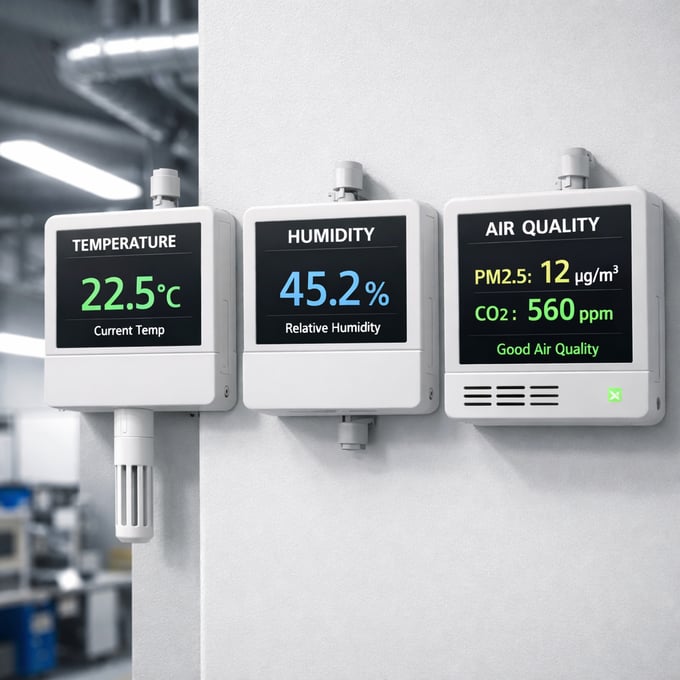


Room Sensors: The Complete Guide to Industrial Environmental Monitoring
In industrial settings, maintaining optimal environmental conditions isn't just about comfort—it's crucial for safety, equipment protection, and regulatory compliance. Room sensors serve as the first line of defense in monitoring and managing these conditions. Whether you're managing a wastewater treatment facility, manufacturing plant, or critical infrastructure, understanding room sensors is essential for protecting your operations.
What Are Room Sensors and Why Are They Critical?
Room sensors are sophisticated monitoring devices that measure various environmental parameters within industrial spaces. These essential tools provide real-time data about conditions that could affect equipment performance, worker safety, or process efficiency.
Key Parameters Monitored by Room Sensors
| Parameter | Importance | Typical Applications |
|---|---|---|
| Temperature | Equipment protection, process control | Pump stations, control rooms, chemical storage |
| Humidity | Corrosion prevention, equipment longevity | Electronic equipment rooms, storage facilities |
| Gas Detection | Safety, regulatory compliance | Confined spaces, chemical processing areas |
| Flood Detection | Asset protection, damage prevention | Basement levels, pump rooms, valve stations |
Benefits of Implementing Room Sensors in Industrial Facilities
Modern room sensors offer numerous advantages that make them indispensable in industrial applications:
1. Enhanced Safety and Compliance
Room sensors provide continuous monitoring of potentially hazardous conditions, helping facilities maintain compliance with OSHA regulations and industry standards. For example, in wastewater treatment facilities, sensors can detect dangerous gas levels before they become life-threatening.
2. Preventive Maintenance
By monitoring environmental conditions that could impact equipment performance, room sensors enable predictive maintenance strategies. This proactive approach can significantly reduce downtime and extend equipment life spans.
3. Energy Efficiency
Temperature and humidity sensors help optimize HVAC operations, leading to substantial energy savings while maintaining ideal conditions for equipment and processes.
Integration with SCADA and Alarm Systems
Room sensors become even more powerful when integrated with supervisory control and data acquisition (SCADA) systems and alarm dialers. This integration enables:
- Real-time monitoring and data logging
- Automated alerts and notifications
- Remote access to sensor data
- Trend analysis and reporting
The RACO Advantage in Room Sensor Integration
RACO's alarm systems seamlessly integrate with various room sensors to provide comprehensive monitoring solutions. Our Catalyst and Verbatim alarm dialers can monitor multiple sensor inputs and notify personnel when conditions exceed preset thresholds.
Best Practices for Room Sensor Implementation
Strategic Sensor Placement
Proper sensor placement is crucial for accurate monitoring. Consider these factors:
| Location Type | Placement Considerations | Recommended Height |
|---|---|---|
| Control Rooms | Away from direct sunlight and HVAC vents | 5-6 feet from floor |
| Pump Stations | Near critical equipment, above potential flood levels | Varies by application |
| Chemical Storage | Multiple sensors for comprehensive coverage | Based on gas density |
Regular Maintenance and Calibration
To ensure reliable operation, room sensors require:
- Regular calibration according to manufacturer specifications
- Periodic cleaning and inspection
- Documentation of maintenance activities
- Annual performance verification
Future Trends in Room Sensor Technology
The room sensor industry continues to evolve with emerging technologies:
IoT Integration
Internet of Things (IoT) connectivity is revolutionizing how room sensors communicate and share data, enabling more sophisticated monitoring and control capabilities.
Artificial Intelligence
AI-powered analytics are enhancing sensor systems' ability to predict potential issues and optimize facility operations automatically.
Conclusion
Room sensors are fundamental to maintaining safe, efficient industrial operations. By implementing a comprehensive room sensor strategy integrated with reliable alarm systems like RACO's solutions, facilities can enhance safety, reduce costs, and improve operational efficiency.
Recommended Internal Links:
- Alarm Dialers
- SCADA Systems
- Remote Monitoring
- Industrial Automation
- Pump Station Monitoring


