

RTD Sensors: The Complete Guide to Resistance Temperature Detectors in Industrial Applications


RTD Sensors: The Complete Guide to Resistance Temperature Detectors in Industrial Applications
Temperature measurement is critical in industrial processes, and RTD sensors stand at the forefront of accurate temperature monitoring technology. Whether you're managing a wastewater treatment facility, overseeing manufacturing processes, or maintaining industrial equipment, understanding RTD sensors is essential for ensuring optimal operations and safety.
What Are RTD Sensors?
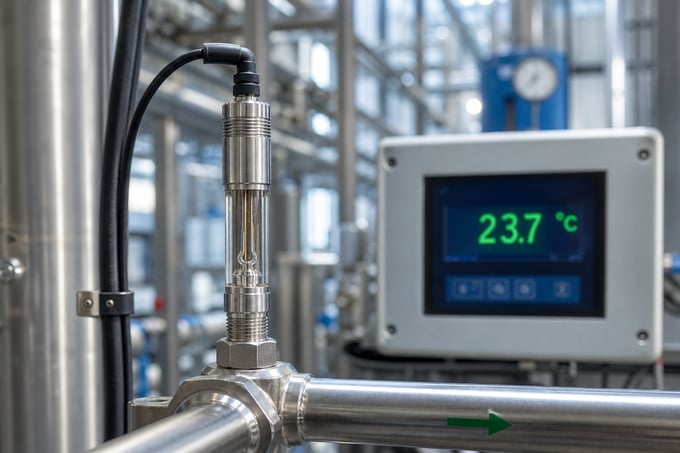
RTD (Resistance Temperature Detector) sensors are precision temperature measurement devices that operate on a simple yet effective principle: the electrical resistance of metals changes predictably with temperature. These sensors typically use pure metals, most commonly platinum, to provide highly accurate and stable temperature measurements across a wide range.
Key Components of RTD Sensors
An RTD sensor consists of several critical components:
| Component | Function |
|---|---|
| Sensing Element | Usually platinum wire or film that changes resistance with temperature |
| Lead Wires | Connect the sensor to measurement instruments |
| Protective Sheath | Shields the sensing element from environmental factors |
| Terminal Block | Provides connection points for external wiring |
Types of RTD Sensors
Several types of RTD sensors are available, each suited for specific applications:
1. Wire-Wound RTDs
These traditional RTDs feature a pure metal wire wrapped around a ceramic or glass core. They offer excellent accuracy and stability but can be more expensive to manufacture.
2. Thin-Film RTDs
Modern thin-film RTDs use a thin layer of platinum deposited on a ceramic substrate. They're more cost-effective and respond faster to temperature changes than wire-wound versions.
3. Coiled Elements
These RTDs feature a wire element coiled to allow for expansion, providing better vibration resistance and durability in industrial applications.
Applications in Industrial Settings
RTD sensors play crucial roles across various industries:
Wastewater Treatment
In wastewater treatment facilities, RTD sensors monitor process temperatures to ensure optimal biological treatment conditions and equipment performance. They're particularly valuable in:
- Digester temperature monitoring - Effluent temperature measurement - Process control systems - Equipment protectionManufacturing Processes
Manufacturing operations rely on RTD sensors for:
- Quality control in production lines - Equipment temperature monitoring - Process optimization - Safety systemsAdvantages of RTD Sensors
RTD sensors offer several significant benefits:
| Advantage | Description |
|---|---|
| High Accuracy | ±0.1°C precision in many applications |
| Excellent Stability | Minimal drift over time |
| Wide Temperature Range | -200°C to 650°C typical range |
| Linear Response | Simplified signal processing |
Installation and Maintenance Best Practices
Proper installation and maintenance are crucial for optimal RTD sensor performance:
Installation Guidelines
Follow these critical installation steps:
1. Choose the appropriate mounting location 2. Ensure proper immersion depth 3. Use appropriate wiring practices 4. Implement proper shielding 5. Consider temperature compensationMaintenance Requirements
Regular maintenance ensures continued accuracy:
- Periodic calibration checks - Physical inspection for damage - Connection verification - Environmental protection assessmentIntegration with Control Systems
RTD sensors can be integrated with various control systems:
SCADA Integration
Modern SCADA systems can directly interface with RTD sensors through:
- 4-20mA analog signals - Digital protocols (Modbus, HART) - Wireless transmitters - PLC interfacesTroubleshooting Common Issues
Understanding common RTD sensor issues helps maintain system reliability:
| Issue | Possible Causes | Solutions |
|---|---|---|
| Inaccurate Readings | Calibration drift, contamination | Recalibration, cleaning |
| Slow Response | Poor thermal contact, coating buildup | Improve mounting, clean sensor |
| Signal Noise | Electrical interference, poor grounding | Improve shielding, check grounds |
Selecting the Right RTD Sensor
Consider these factors when choosing an RTD sensor:
- Temperature range requirements - Required accuracy - Response time needs - Environmental conditions - Installation constraints - Budget considerationsFuture Trends in RTD Sensor Technology
The RTD sensor market continues to evolve with:
- Smart sensor integration - Wireless capabilities - Enhanced diagnostic features - Improved durability - Greater accuracyConclusion
RTD sensors remain essential tools for accurate temperature measurement in industrial applications. Their reliability, accuracy, and versatility make them invaluable in wastewater treatment, manufacturing, and numerous other industries. By understanding their principles, applications, and maintenance requirements, organizations can maximize the benefits of these crucial measurement devices.
For expert guidance on implementing RTD sensors in your industrial application, contact RACO Manufacturing & Engineering. Our team of specialists can help you select and integrate the right temperature monitoring solution for your specific needs.