


RTD Probe: The Complete Guide to Temperature Measurement in Industrial Applications


RTD Probe: The Complete Guide to Temperature Measurement in Industrial Applications
In the world of industrial temperature measurement, precision and reliability are paramount. RTD probes (Resistance Temperature Detectors) stand as the gold standard for accurate temperature monitoring across numerous industries, from wastewater treatment to food processing. This comprehensive guide will explore everything you need to know about RTD probes, their applications, and why they're essential for modern industrial processes.
What is an RTD Probe?
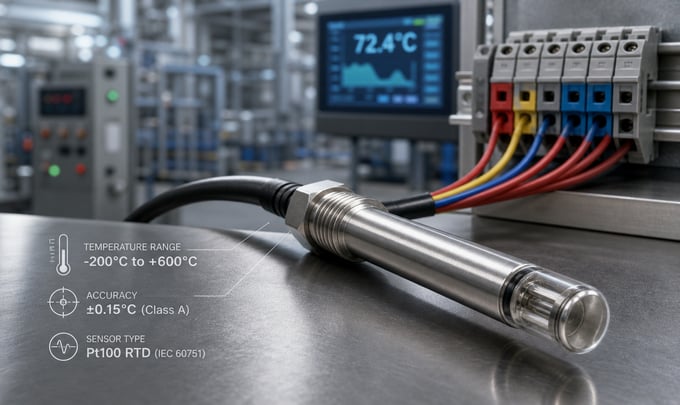
An RTD probe is a temperature sensor that operates on the principle that electrical resistance in metal changes predictably with temperature. The most common type uses platinum as its sensing element (Pt100 or Pt1000), though nickel and copper variants also exist. These sensors provide exceptional accuracy and stability, making them ideal for critical industrial applications.
Key Components of an RTD Probe
Understanding the anatomy of an RTD probe helps explain its reliability and precision:
| Component | Function |
|---|---|
| Sensing Element | Usually platinum wire or film that changes resistance with temperature |
| Protective Sheath | Shields the element from environmental factors |
| Lead Wires | Connects the sensor to measurement instruments |
| Terminal Block | Provides connection points for external wiring |
Advantages of RTD Probes in Industrial Applications
RTD probes offer several distinct advantages that make them the preferred choice for industrial temperature measurement:
1. Superior Accuracy
RTD probes provide accuracy levels up to ±0.1°C, significantly better than thermocouples and other temperature sensing devices. This precision is crucial in processes where temperature control directly impacts product quality or safety.
2. Excellent Stability
Unlike other temperature sensors, RTD probes maintain their calibration over extended periods, reducing maintenance requirements and ensuring consistent readings.
3. Wide Temperature Range
Industrial RTD probes typically operate from -200°C to 650°C, making them suitable for various applications, from cryogenic processes to high-temperature industrial operations.
Common Applications of RTD Probes
RTD probes find extensive use across various industries and applications:
Wastewater Treatment
In wastewater treatment facilities, RTD probes monitor process temperatures crucial for biological treatment processes and ensure optimal bacterial activity for waste breakdown. They're particularly valuable in:
- Anaerobic digestion monitoring - Aeration basin temperature control - Effluent temperature measurementFood and Beverage Processing
Temperature control is critical in food processing for both quality and safety. RTD probes help maintain precise temperatures during:
- Pasteurization processes - Storage and transportation - Cooking and cooling operationsInstallation and Maintenance Best Practices
Proper installation and maintenance of RTD probes ensure optimal performance and longevity:
Installation Guidelines
Follow these key installation practices:
1. Ensure proper immersion depth 2. Use appropriate thermal wells when needed 3. Consider vibration protection in dynamic environments 4. Implement proper wire routing and protectionMaintenance Requirements
Regular maintenance helps prevent issues and extends probe life:
- Periodic calibration checks - Physical inspection for damage - Cleaning according to manufacturer specifications - Connection verificationTroubleshooting Common RTD Probe Issues
| Issue | Possible Cause | Solution |
|---|---|---|
| Erratic Readings | Loose connections or interference | Check wiring and shield connections |
| Slow Response | Poor thermal contact or coating buildup | Clean probe or improve installation |
| Drift in Readings | Sensor contamination or aging | Recalibrate or replace probe |
Selecting the Right RTD Probe
Consider these factors when choosing an RTD probe:
Environmental Considerations
Evaluate the following environmental factors:
- Temperature range requirements - Exposure to corrosive materials - Presence of vibration - Need for washdown resistanceTechnical Specifications
Key technical aspects to consider include:
- Accuracy requirements - Response time needs - Connection type preferences - Output signal requirementsIntegration with Control Systems
RTD probes commonly interface with various control systems and monitoring equipment. Modern industrial applications often require:
Signal Processing
The resistance signal from an RTD probe must be converted into a temperature reading. This typically involves:
- Signal conditioning - Analog-to-digital conversion - Temperature calculation algorithmsCommunication Protocols
RTD probes can be integrated with different communication protocols:
- 4-20mA analog signals - HART protocol - Modbus RTU - Industrial EthernetFuture Trends in RTD Probe Technology
The field of temperature measurement continues to evolve with new developments:
- Smart sensors with self-diagnostic capabilities - Wireless connectivity options - Enhanced durability materials - Improved accuracy specificationsConclusion
RTD probes remain an essential tool in industrial temperature measurement, offering unmatched accuracy and reliability. Understanding their proper selection, installation, and maintenance is crucial for optimal performance in any application. As technology advances, these sensors continue to evolve, providing even better solutions for temperature monitoring needs.
For expert guidance on selecting and implementing RTD probes in your industrial application, contact RACO Manufacturing & Engineering. Our team of specialists can help you choose the right temperature measurement solution for your specific needs.


