


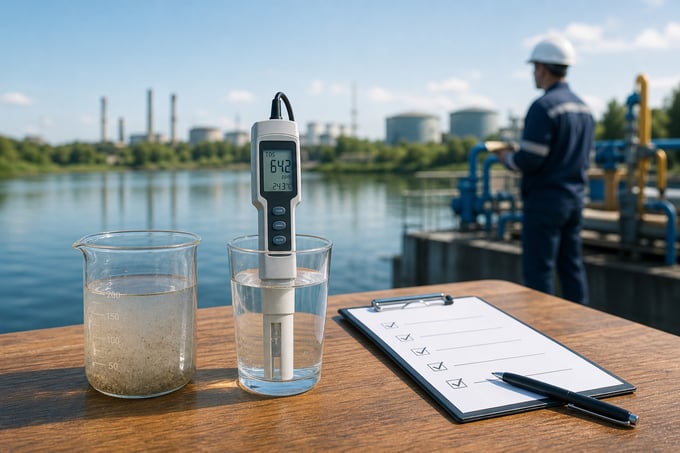
TDS Water Quality: The Complete Guide to Total Dissolved Solids Monitoring


TDS Water Quality: The Complete Guide to Total Dissolved Solids Monitoring
Understanding TDS water quality is crucial for wastewater treatment professionals, industrial process managers, and environmental monitoring teams. Total Dissolved Solids (TDS) serves as a key indicator of water quality and directly impacts treatment processes, equipment longevity, and regulatory compliance. This comprehensive guide will explore everything you need to know about TDS monitoring, measurement, and management.
What is TDS in Water Quality?
Total Dissolved Solids refers to the combined content of all inorganic and organic substances present in water in molecular, ionized, or micro-granular suspended form. These substances typically include:
| Category | Common Examples |
|---|---|
| Minerals | Calcium, Magnesium, Potassium, Sodium |
| Salts | Chlorides, Sulfates, Carbonates |
| Metals | Iron, Manganese, Lead |
| Organic Matter | Decomposed plant and animal material |
Why TDS Water Quality Matters
TDS levels significantly impact various aspects of water treatment and industrial processes:
1. Equipment Performance and Longevity
High TDS levels can lead to scale formation in pipes, valves, and treatment equipment. This scaling reduces efficiency, increases maintenance costs, and can ultimately lead to equipment failure. Regular TDS monitoring helps prevent these issues by allowing early intervention when levels exceed acceptable ranges.
2. Treatment Process Efficiency
TDS concentration directly affects the effectiveness of treatment processes such as reverse osmosis, ion exchange, and chemical treatment. Understanding and monitoring TDS levels enables operators to optimize treatment parameters and maintain process efficiency.
3. Regulatory Compliance
Many industries must comply with specific TDS discharge limits set by environmental protection agencies. Continuous monitoring of TDS water quality helps ensure compliance and avoid costly penalties.
Measuring and Monitoring TDS Water Quality
Accurate TDS measurement requires reliable instrumentation and proper monitoring protocols. Here are the primary methods used in the industry:
Conductivity Meters
These devices measure the water's electrical conductivity, which correlates directly with TDS levels. Modern conductivity meters often include temperature compensation for more accurate readings.
Gravimetric Analysis
This laboratory method involves evaporating a water sample and weighing the remaining dissolved solids. While more time-consuming, it provides highly accurate results for calibration and verification purposes.
Online TDS Monitoring Systems
Continuous monitoring systems, like those offered by RACO Manufacturing & Engineering, provide real-time TDS measurements and automated alerts when levels exceed predetermined thresholds. These systems integrate with SCADA and other control systems for comprehensive water quality management.
Recommended TDS Levels for Different Applications
| Application | Recommended TDS Range (mg/L) |
|---|---|
| Drinking Water | < 500 |
| Industrial Process Water | < 150 |
| Boiler Feed Water | < 50 |
| Agricultural Irrigation | < 2000 |
Managing High TDS Levels
When TDS water quality exceeds acceptable limits, several treatment options are available:
1. Reverse Osmosis (RO)
RO systems effectively remove dissolved solids through a semi-permeable membrane. This method is particularly effective for industrial applications requiring high-purity water.
2. Ion Exchange
This process removes specific ions from water by exchanging them with more desirable ions. It's commonly used in combination with other treatment methods for comprehensive TDS reduction.
3. Distillation
While energy-intensive, distillation provides extremely pure water by removing nearly all dissolved solids through the evaporation and condensation process.
Implementing an Effective TDS Monitoring Program
A successful TDS water quality monitoring program requires:
1. Automated Monitoring Systems
Install reliable monitoring equipment with remote capabilities for real-time data access and alerts. RACO's Catalyst and Guard-It systems provide comprehensive monitoring solutions with immediate notification capabilities.
2. Regular Calibration
Maintain measurement accuracy through regular instrument calibration and verification against known standards.
3. Data Management
Implement robust data collection and analysis systems to track trends, identify issues early, and maintain regulatory compliance records.
The Role of Remote Monitoring in TDS Management
Remote monitoring systems play a crucial role in modern TDS water quality management. These systems offer:
- 24/7 monitoring capabilities
- Immediate alert notification
- Historical data tracking and analysis
- Integration with existing control systems
Conclusion
Effective TDS water quality monitoring is essential for maintaining efficient operations, protecting equipment, and ensuring regulatory compliance. By implementing appropriate monitoring systems and following best practices for measurement and management, organizations can maintain optimal water quality while minimizing operational costs and environmental impact.
For more information about implementing automated TDS monitoring systems, contact RACO Manufacturing & Engineering to discuss your specific requirements and discover how our solutions can enhance your water quality management program.


