

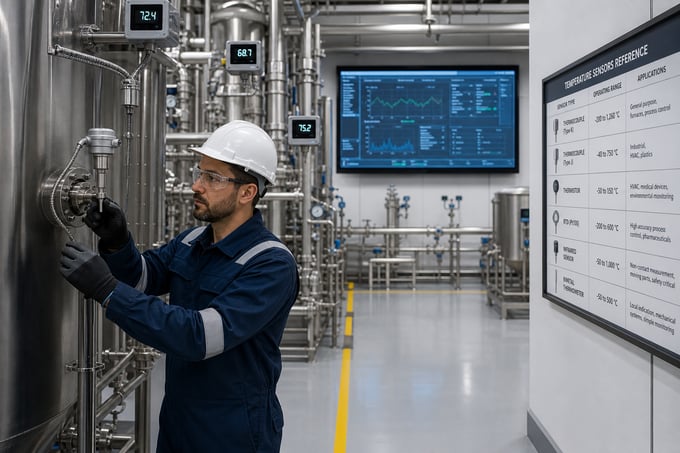
Temperature Control Sensors: A Comprehensive Guide to Industrial Applications and Best Practices


Temperature Control Sensors: A Comprehensive Guide to Industrial Applications and Best Practices
Temperature control sensors are critical components in modern industrial processes, particularly in wastewater treatment, manufacturing, and process control applications. These sophisticated devices ensure precise temperature monitoring and control, helping maintain optimal operating conditions and protect valuable equipment. In this comprehensive guide, we'll explore everything you need to know about temperature control sensors, their applications, and how to select the right solution for your facility.
Understanding Temperature Control Sensors
Temperature control sensors are devices that measure temperature and convert this measurement into an electrical signal that can be interpreted by control systems. These sensors serve as the foundation for temperature monitoring and control systems, enabling automated responses to temperature changes and ensuring consistent process conditions.
Types of Temperature Control Sensors
| Sensor Type | Operating Range | Best Applications |
|---|---|---|
| Thermocouples | -200°C to 2000°C | High-temperature industrial processes |
| RTDs (Resistance Temperature Detectors) | -200°C to 650°C | Precision measurements in moderate temperature ranges |
| Thermistors | -50°C to 250°C | Low-cost applications requiring quick response |
| Infrared Sensors | -70°C to 3000°C | Non-contact temperature measurement |
Critical Applications in Wastewater Treatment
In wastewater treatment facilities, temperature control sensors play a vital role in maintaining optimal conditions for biological processes and ensuring equipment protection. These sensors are essential in:
Biological Treatment Processes
Temperature significantly impacts the efficiency of biological treatment processes. Microorganisms responsible for breaking down organic matter operate optimally within specific temperature ranges. Temperature control sensors help maintain these ideal conditions, typically between 20°C and 35°C for mesophilic processes.
Equipment Protection
Critical equipment such as pumps, motors, and treatment tanks require constant temperature monitoring to prevent overheating and ensure proper operation. Advanced temperature control sensors with alarm capabilities can trigger automated responses when temperatures exceed predetermined thresholds.
Integration with SCADA Systems
Modern temperature control sensors seamlessly integrate with Supervisory Control and Data Acquisition (SCADA) systems, providing real-time monitoring and control capabilities. This integration enables:
- Remote Monitoring: Operators can monitor temperature conditions from anywhere, ensuring immediate response to potential issues
- Data Logging: Historical temperature data can be recorded and analyzed for process optimization
- Automated Control: Systems can automatically adjust processes based on temperature readings
Selecting the Right Temperature Control Sensor
Choosing the appropriate temperature control sensor requires careful consideration of several factors:
Environmental Considerations
Industrial environments often present challenging conditions that can affect sensor performance. Consider:
- Exposure to corrosive chemicals
- Ambient temperature ranges
- Moisture levels and submersion requirements
- Vibration and mechanical stress
Accuracy Requirements
Different applications require varying levels of accuracy. High-precision processes may require sensors with accuracy ratings of ±0.1°C, while general monitoring applications might accept ±1°C or greater.
Installation and Maintenance Best Practices
Proper installation and maintenance are crucial for optimal temperature control sensor performance:
Installation Guidelines
- Ensure proper thermal contact between the sensor and measured surface
- Use appropriate thermal compounds when necessary
- Install sensors away from sources of electrical interference
- Implement proper shielding and grounding practices
Maintenance Schedule
| Maintenance Task | Frequency | Purpose |
|---|---|---|
| Calibration Check | Quarterly | Ensure accuracy |
| Physical Inspection | Monthly | Check for damage or wear |
| Cleaning | As needed | Remove buildup or contamination |
Advanced Features and Technologies
Modern temperature control sensors incorporate advanced features that enhance their functionality:
Smart Diagnostics
Advanced sensors include self-diagnostic capabilities that can detect:
- Sensor drift
- Calibration needs
- Component failure
- Communication issues
Conclusion
Temperature control sensors are indispensable in modern industrial applications, particularly in wastewater treatment facilities. By understanding their types, applications, and best practices for selection and maintenance, facility managers can ensure optimal process control and equipment protection. For expert guidance on implementing temperature control solutions in your facility, contact RACO Manufacturing & Engineering's technical support team.
Recommended Internal Links:
- SCADA systems
- Industrial automation
- Process control
- Wastewater treatment monitoring
- Alarm systems