

Temperature Monitoring Systems: A Complete Guide to Industrial Applications and Best Practices


Temperature Monitoring Systems: A Complete Guide to Industrial Applications and Best Practices
Temperature monitoring forms the backbone of countless industrial processes, from wastewater treatment to pharmaceutical manufacturing. As industries become increasingly automated and efficiency-driven, the importance of accurate, reliable temperature monitoring systems has never been more critical. This comprehensive guide explores everything you need to know about industrial temperature monitoring, including best practices, technology solutions, and real-world applications.
Understanding the Fundamentals of Temperature Monitoring
Temperature monitoring involves the continuous measurement and recording of temperature values in various industrial processes. This critical function ensures product quality, process efficiency, and safety compliance across multiple industries. Modern temperature monitoring systems combine advanced sensors, data logging capabilities, and remote monitoring features to provide comprehensive temperature control solutions.
Key Components of Temperature Monitoring Systems
A robust temperature monitoring system consists of several essential components:
| Component | Function | Importance |
|---|---|---|
| Temperature Sensors | Measure temperature values | Primary data collection point |
| Data Loggers | Record temperature readings | Historical data tracking |
| Monitoring Software | Analysis and visualization | Decision-making support |
| Alarm Systems | Alert notification | Critical response management |
Industrial Applications of Temperature Monitoring
Wastewater Treatment
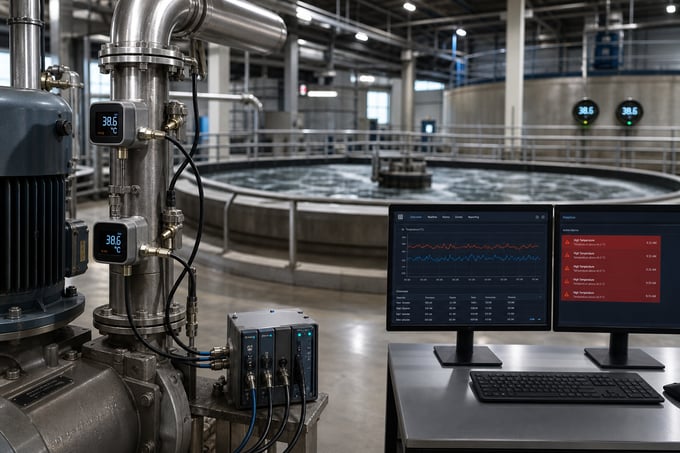
In wastewater treatment facilities, temperature monitoring plays a crucial role in maintaining optimal biological treatment processes. Bacterial activity, crucial for breaking down organic matter, is highly temperature-dependent. Monitoring systems ensure these processes operate within the ideal temperature range of 20-35°C (68-95°F).
Manufacturing Processes
Temperature monitoring in manufacturing ensures product quality and process efficiency. For example, in plastic injection molding, precise temperature control prevents defects and ensures consistent product quality. Similarly, food and beverage processing requires strict temperature monitoring to maintain safety and quality standards.
Advanced Temperature Monitoring Technologies
Remote Temperature Monitoring Solutions
Modern temperature monitoring systems leverage IoT technology for remote monitoring capabilities. These systems allow operators to:
- Monitor temperature data in real-time from any location
- Receive instant alerts when temperatures exceed preset thresholds
- Access historical data for trend analysis and reporting
- Integrate with existing SCADA systems for comprehensive process control
Wireless Temperature Monitoring
Wireless temperature monitoring systems offer several advantages over traditional wired systems:
| Benefit | Description |
|---|---|
| Flexibility | Easy installation and reconfiguration |
| Cost-effectiveness | Reduced installation and maintenance costs |
| Scalability | Simple system expansion capabilities |
| Reliability | Advanced error detection and correction |
Best Practices for Temperature Monitoring Implementation
System Design Considerations
When implementing a temperature monitoring system, consider these critical factors:
- Sensor placement and coverage requirements
- Environmental conditions and protection needs
- Data storage and backup requirements
- Integration with existing control systems
- Regulatory compliance requirements
Maintenance and Calibration
Regular maintenance and calibration ensure accurate temperature monitoring. Establish a routine maintenance schedule that includes:
- Sensor calibration verification
- System performance testing
- Data accuracy validation
- Equipment cleaning and inspection
Regulatory Compliance and Standards
Temperature monitoring systems must comply with various industry standards and regulations, including:
- FDA 21 CFR Part 11 for pharmaceutical applications
- HACCP requirements for food processing
- EPA regulations for environmental monitoring
- ISO 9001 quality management standards
Future Trends in Temperature Monitoring
The temperature monitoring industry continues to evolve with emerging technologies:
- AI-powered predictive maintenance
- Blockchain for data security and traceability
- Edge computing for faster response times
- Advanced analytics for process optimization
Choosing the Right Temperature Monitoring Solution
When selecting a temperature monitoring system, consider these factors:
| Factor | Considerations |
|---|---|
| Accuracy Requirements | Required precision level for your application |
| Environmental Conditions | Operating environment challenges |
| Integration Capabilities | Compatibility with existing systems |
| Scalability | Future expansion needs |
Conclusion
Effective temperature monitoring is crucial for maintaining efficient industrial processes and ensuring product quality. By implementing the right temperature monitoring system and following best practices, organizations can optimize their operations, reduce costs, and maintain regulatory compliance. As technology continues to advance, the capabilities of temperature monitoring systems will expand, offering even greater benefits to industrial applications.
For expert guidance on implementing advanced temperature monitoring solutions for your industrial application, contact RACO Manufacturing & Engineering. Our team of specialists can help you design and implement a system that meets your specific requirements.