

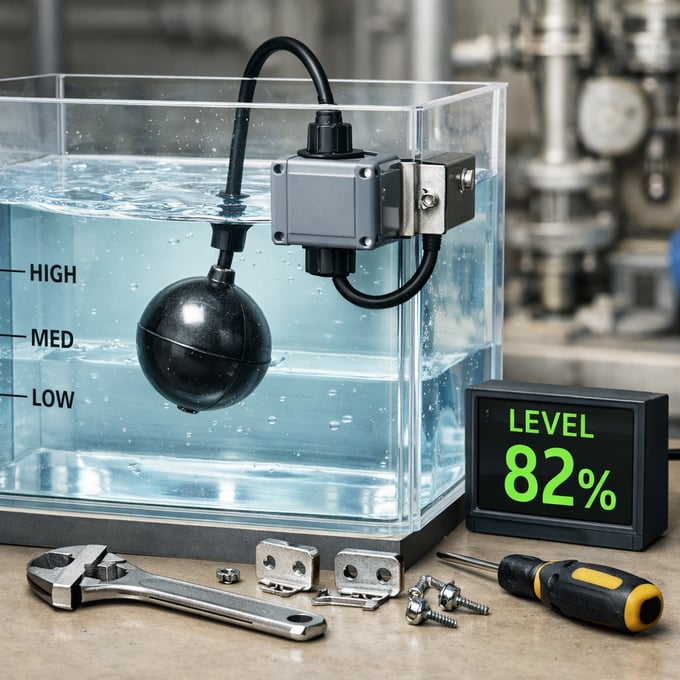
Water Level Float Switch: The Complete Guide to Selection, Installation & Maintenance


Water Level Float Switch: The Complete Guide to Selection, Installation & Maintenance
Managing liquid levels effectively is crucial across numerous industries, from wastewater treatment to industrial processing. At the heart of this control lies a fundamental component: the water level float switch. This comprehensive guide will explore everything you need to know about these essential devices, helping you make informed decisions for your liquid level control applications.
What Is a Water Level Float Switch?
A water level float switch is a device that monitors and controls liquid levels in tanks, basins, and other containers. Operating on a simple yet reliable mechanism, these switches use buoyancy to detect liquid levels and trigger corresponding actions, such as activating pumps or alarms when predetermined levels are reached.
Key Components of a Float Switch
Understanding the basic components helps appreciate how these devices function:
| Component | Function |
|---|---|
| Float Ball | Buoyant element that rises and falls with liquid level |
| Switch Mechanism | Mercury or mechanical switch that opens/closes based on float position |
| Cable | Carries electrical signals and provides mechanical support |
| Mounting Hardware | Secures the switch to the tank or vessel |
Types of Water Level Float Switches
Several types of float switches are available, each suited to specific applications:
1. Vertical Float Switches
Mounted vertically, these switches move up and down along a stem or rod. They're ideal for applications requiring precise level detection and are commonly used in smaller tanks.
2. Tethered Float Switches
These switches hang freely in the liquid and pivot at their mounting point. They're excellent for wastewater applications due to their resistance to fouling and ability to handle turbulent conditions.
3. Multi-Point Float Switches
Featuring multiple switching points along a single stem, these devices can monitor several levels simultaneously, making them perfect for complex level control scenarios.
Applications and Industries
Water level float switches find applications across numerous sectors:
| Industry | Common Applications |
|---|---|
| Wastewater Treatment | Pump control, high-level alarms, overflow prevention |
| Industrial Processing | Tank level monitoring, process control |
| Agricultural | Irrigation systems, storage tank management |
| Municipal Water | Lift station control, distribution system monitoring |
Selection Criteria for Water Level Float Switches
Choosing the right float switch requires careful consideration of several factors:
Environmental Considerations
- Chemical compatibility with the liquid being monitored
- Temperature range of the application
- Pressure requirements
- Presence of solids or debris in the liquid
Electrical Requirements
Understanding electrical specifications is crucial for proper operation:
| Parameter | Consideration |
|---|---|
| Voltage Rating | Must match system requirements (AC or DC) |
| Current Rating | Should exceed maximum expected load |
| Switch Type | Normally open or normally closed configuration |
Installation Best Practices
Proper installation ensures reliable operation and longevity:
Mounting Considerations
1. Location Selection - Choose a spot free from turbulence - Ensure adequate clearance for float movement - Consider maintenance accessibility
2. Cable Management - Secure cables properly to prevent tangling - Use appropriate strain relief - Maintain proper cable length for float movement
3. Calibration - Set appropriate activation levels - Test operation through full range of motion - Verify switch points match system requirements
Maintenance and Troubleshooting
Regular maintenance is essential for reliable operation:
Maintenance Schedule
| Frequency | Task |
|---|---|
| Monthly | Visual inspection for damage or debris |
| Quarterly | Operation verification and cleaning |
| Annually | Comprehensive testing and calibration check |
Common Issues and Solutions
Understanding typical problems helps maintain system reliability:
| Problem | Possible Solution |
|---|---|
| Failed Switching | Check for mechanical binding or electrical connections |
| False Readings | Clean float and verify proper mounting |
| Inconsistent Operation | Inspect for damage and verify proper float movement |
Advanced Features and Integration
Modern water level float switches often include advanced capabilities:
- Remote monitoring capabilities
- Integration with SCADA systems
- Data logging functionality
- Redundant switching options
Safety Considerations
Safety should always be a primary concern:
- Use appropriate personal protective equipment during installation and maintenance
- Follow proper lockout/tagout procedures
- Ensure proper grounding and electrical protection
- Comply with relevant safety standards and regulations
Conclusion
Water level float switches are fundamental components in liquid level control systems. Understanding their types, applications, and maintenance requirements ensures optimal performance and longevity. When selecting and implementing these devices, consider your specific application requirements, environmental conditions, and maintenance capabilities to choose the most appropriate solution.
For expert guidance on selecting and implementing water level float switches for your application, contact RACO Manufacturing & Engineering. Our team of specialists can help you choose the right solution for your specific needs.