

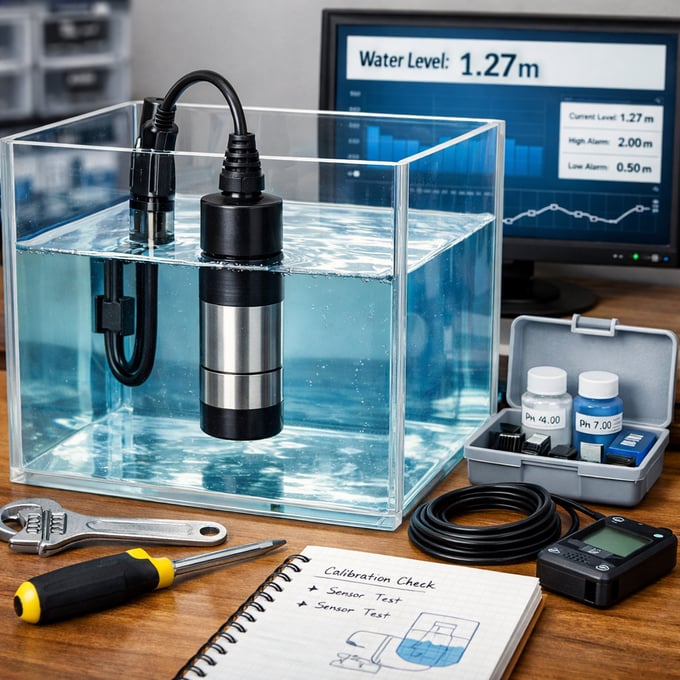
Water Level Transducers: The Complete Guide to Selection, Installation, and Maintenance


Water Level Transducers: The Complete Guide to Selection, Installation, and Maintenance
Water level transducers are essential instruments in modern water management systems, playing a crucial role in monitoring and controlling water levels across various applications. Whether you're managing a wastewater treatment facility, monitoring groundwater, or overseeing industrial processes, understanding these devices is crucial for maintaining efficient operations.
What is a Water Level Transducer?
A water level transducer is a sophisticated measurement device that converts water level or depth into an electrical signal that can be transmitted to monitoring and control systems. These instruments are fundamental components in water management infrastructure, providing accurate and reliable data for decision-making and process control.
| Component | Function |
|---|---|
| Sensing Element | Measures physical water level/pressure |
| Transducer | Converts physical measurement to electrical signal |
| Housing | Protects internal components from environment |
| Output Interface | Transmits signal to monitoring systems |
Types of Water Level Transducers
1. Submersible Pressure Transducers
These devices are designed to be fully submerged in the liquid being measured. They calculate water level by measuring hydrostatic pressure and are particularly effective in wells, tanks, and deep water applications.
2. Ultrasonic Level Transducers
Operating from above the liquid surface, ultrasonic transducers emit sound waves and measure the time taken for echoes to return, providing non-contact level measurement.
3. Capacitive Level Transducers
These sensors use electrical capacitance changes to measure liquid levels, offering high accuracy in clean liquid applications.
Key Features to Consider When Selecting a Water Level Transducer
Choosing the right water level transducer requires careful consideration of several factors:
| Feature | Importance | Considerations |
|---|---|---|
| Accuracy | Critical | ±0.1% to ±1% of full scale |
| Measurement Range | High | Application-specific requirements |
| Environmental Protection | Essential | IP67/IP68 ratings for submersible units |
| Output Signal | Important | 4-20mA, 0-5V, or digital outputs |
Installation Best Practices
Proper installation is crucial for optimal performance and longevity of water level transducers. Follow these essential steps:
1. Location Selection
Choose a location that provides:
- Representative measurement of the water level
- Protection from turbulence and wave action
- Accessibility for maintenance
- Adequate clearance from obstacles
2. Mounting Considerations
Secure mounting is essential for accurate measurements. Consider these factors:
- Use appropriate mounting hardware rated for the environment
- Ensure proper cable strain relief
- Install protective conduit for cable runs
- Implement proper grounding and surge protection
Maintenance and Calibration
Regular maintenance ensures reliable operation and extends the life of your water level transducer. Develop a maintenance schedule that includes:
| Maintenance Task | Frequency | Purpose |
|---|---|---|
| Visual Inspection | Monthly | Check for physical damage or contamination |
| Calibration Check | Quarterly | Verify measurement accuracy |
| Full Calibration | Annually | Ensure continued accuracy and reliability |
| Cable Inspection | Semi-annually | Check for damage or wear |
Troubleshooting Common Issues
Understanding common problems and their solutions can help maintain optimal performance:
1. Accuracy Drift
Possible causes include:
- Sensor fouling or contamination
- Temperature compensation errors
- Calibration drift
2. Signal Loss or Interference
Check for:
- Cable damage or connection issues
- Power supply problems
- Environmental interference
Integration with Control Systems
Modern water level transducers can integrate with various control and monitoring systems:
- SCADA systems for comprehensive facility monitoring
- PLC-based control systems for automated operations
- Remote monitoring solutions for real-time data access
- Cloud-based platforms for data analysis and reporting
Conclusion
Water level transducers are vital instruments in water management systems, providing accurate and reliable level measurements for various applications. By understanding the different types, installation requirements, and maintenance needs, you can ensure optimal performance and longevity of these crucial devices.
For expert guidance on selecting and implementing water level transducers in your application, contact RACO Manufacturing & Engineering. Our team of specialists can help you choose the right solution for your specific needs.