

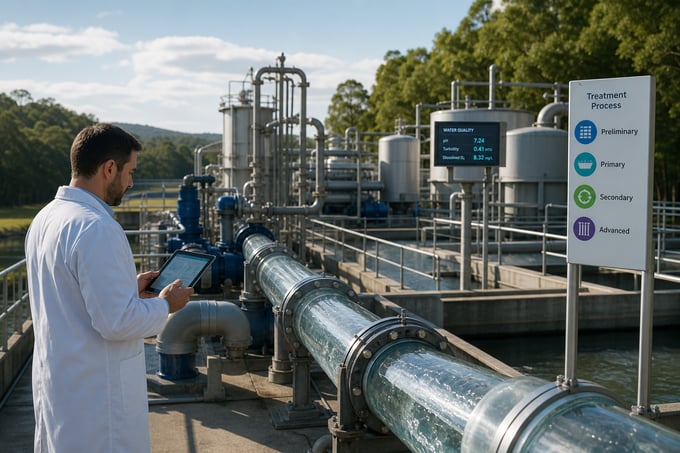


What Is Water Treatment? A Comprehensive Guide to Clean Water Production
Water treatment is the vital process of making water safe and suitable for various uses, from drinking water for communities to specialized industrial applications. As experts in water and wastewater monitoring systems, we understand that clean water is not just a convenience—it's essential for public health, industrial processes, and environmental protection.
Understanding Water Treatment: The Basics
Water treatment refers to the series of processes that transform raw water from sources like rivers, lakes, or groundwater into safe, usable water. The complexity of treatment depends on both the source water quality and its intended use. Municipal water treatment facilities process millions of gallons daily to ensure communities have access to clean, potable water.
The Main Stages of Water Treatment
1. Preliminary Treatment
The initial stage removes large debris and objects from incoming water through:
- Screening to catch large objects
- Grit removal to separate sand and small stones
- Flow equalization to manage treatment capacity
2. Primary Treatment
During primary treatment, physical processes remove suspended solids:
| Process | Purpose | Removal Efficiency |
|---|---|---|
| Sedimentation | Settling of suspended particles | 50-70% of suspended solids |
| Flotation | Removal of oils and light materials | 75-90% of floating matter |
| Coagulation | Particle clumping for easier removal | 80-90% of total suspended solids |
3. Secondary Treatment
This biological treatment phase removes dissolved organic matter through processes such as:
- Activated sludge treatment, where beneficial bacteria consume organic pollutants
- Trickling filters that use biological films to clean water
- Rotating biological contactors (RBCs) for organic matter removal
4. Advanced Treatment
Advanced or tertiary treatment provides additional purification through:
- Filtration using sand, activated carbon, or membrane systems
- Nutrient removal processes for nitrogen and phosphorus
- Disinfection using chlorine, UV light, or ozone
Monitoring and Control in Water Treatment
Effective water treatment relies heavily on sophisticated monitoring and control systems. SCADA systems and remote monitoring solutions play crucial roles in:
- Real-time water quality monitoring
- Process control and optimization
- Early warning for system failures
- Regulatory compliance documentation
Types of Water Treatment Systems
Municipal Water Treatment
Municipal systems treat water for entire communities, focusing on:
- Drinking water safety
- Consistent quality maintenance
- Large-scale distribution
Industrial Water Treatment
Industrial applications require specialized treatment for:
- Process water preparation
- Cooling system maintenance
- Wastewater treatment before discharge
Point-of-Use Treatment
Small-scale systems for specific locations include:
- Home filtration systems
- Commercial water softeners
- Specialized industrial filters
Common Water Quality Parameters
| Parameter | Importance | Typical Treatment Method |
|---|---|---|
| pH | Affects treatment efficiency and pipe corrosion | Chemical adjustment |
| Turbidity | Indicator of water clarity and filter effectiveness | Filtration and coagulation |
| Dissolved Oxygen | Essential for biological treatment processes | Aeration systems |
The Role of Automation in Water Treatment
Modern water treatment facilities rely heavily on automation to maintain consistent water quality and operational efficiency. Key automation components include:
- SCADA systems for process control and monitoring
- Automated chemical dosing systems
- Remote monitoring and alarm systems
- Data logging and reporting systems
Water Treatment Regulations and Compliance
Water treatment facilities must comply with various regulations, including:
- Safe Drinking Water Act (SDWA) requirements
- Clean Water Act (CWA) standards
- State and local water quality regulations
- Industry-specific discharge permits
Future Trends in Water Treatment
The water treatment industry continues to evolve with emerging technologies and approaches:
- Advanced membrane technologies
- Smart monitoring systems
- Energy-efficient treatment processes
- Resource recovery from wastewater