


Where Does Water Go When It Goes Down the Drain? A Complete Journey Through Wastewater Systems


Where Does Water Go When It Goes Down the Drain? A Complete Journey Through Wastewater Systems
Every time you flush a toilet, run your dishwasher, or watch water spiral down your sink drain, you're initiating a complex journey that spans miles of infrastructure and involves sophisticated engineering systems. While most of us rarely think beyond the drain, understanding where water goes after it leaves our homes is crucial for appreciating modern sanitation and identifying potential system failures before they become catastrophic.
The Initial Journey: From Your Home to the Sewer System
When water disappears down your drain, it first travels through your home's plumbing system. This network of pipes, typically 3-4 inches in diameter, carries wastewater from various sources in your home:
- Kitchen sinks and garbage disposals
- Bathroom fixtures (toilets, sinks, showers)
- Washing machines
- Dishwashers
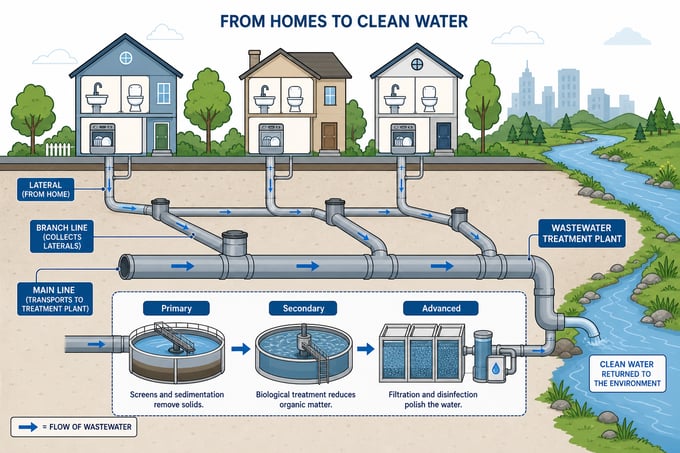
These pipes converge into a larger main drain pipe, usually 4-6 inches in diameter, which connects to your property's sewer lateral. The sewer lateral is the pipe that connects your home's plumbing to the municipal sewer system or your private septic system.
Two Paths: Municipal Sewer Systems vs. Septic Systems
Municipal Sewer Systems
In urban and suburban areas, wastewater typically flows into the municipal sewer system. These systems use gravity and pumping stations to move wastewater through progressively larger pipes, eventually reaching the wastewater treatment plant. Modern sewer systems are equipped with sophisticated monitoring equipment that helps utilities track flow rates, detect blockages, and prevent overflow events.
| Sewer Pipe Type | Typical Diameter | Purpose |
|---|---|---|
| Lateral Line | 4-6 inches | Connects home to main sewer |
| Branch Line | 8-12 inches | Collects from multiple laterals |
| Main Line | 12-36 inches | Major collection pipe |
| Trunk Line | 36+ inches | Primary transport to treatment plant |
Septic Systems
In rural areas without access to municipal sewer systems, wastewater flows into a septic system. These self-contained treatment systems typically consist of:
- Septic Tank: A large underground container where solids settle and initial decomposition occurs
- Distribution Box: Directs water flow to different parts of the drain field
- Drain Field: A network of perforated pipes that allow treated water to slowly filter into the soil
The Treatment Process: Turning Wastewater into Clean Water
Whether through municipal or septic systems, wastewater undergoes several treatment stages:
Primary Treatment
During primary treatment, large solid materials are removed through screening and settling processes. This stage removes approximately 60% of suspended solids and 35% of BOD (Biochemical Oxygen Demand).
Secondary Treatment
Secondary treatment involves biological processes where beneficial bacteria break down organic matter. This stage typically removes up to 85% of remaining pollutants.
Advanced Treatment
Many modern facilities include advanced treatment processes such as:
- Nutrient removal (nitrogen and phosphorus)
- Disinfection (using UV light or chlorination)
- Filtration through various media


