

Where Does Water Go When You Drink It? A Complete Journey Through Your Body


Where Does Water Go When You Drink It? A Complete Journey Through Your Body
Have you ever wondered what happens to water after you take a sip? While it might seem like a simple question, the journey of water through your body is a fascinating process that involves multiple organs and complex biological systems. As experts in water management and monitoring systems, we at RACO Manufacturing & Engineering understand the importance of tracking water throughout its various cycles - including how it moves through the human body.
The Initial Journey: From Mouth to Stomach
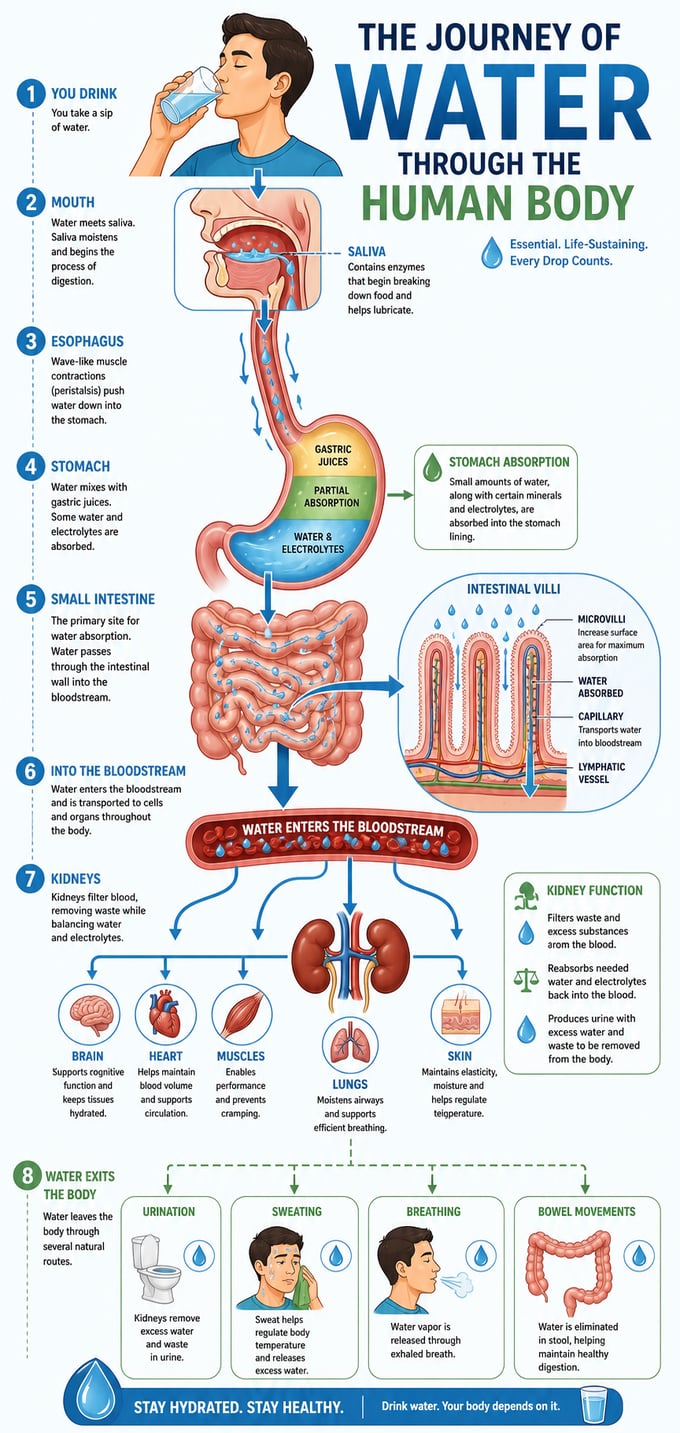
When you take a drink of water, its journey begins immediately. The process starts in your mouth, where the water first encounters saliva. Unlike food, water doesn't need to be broken down by enzymes in your mouth, so it quickly moves to the next stage of its journey.
The water travels down your esophagus through a process called peristalsis - a series of wave-like muscle contractions that push the liquid down toward your stomach. This journey takes only seconds to complete.
Processing in the Stomach
Once water reaches your stomach, several processes begin simultaneously:
| Time Frame | Action | Result |
|---|---|---|
| 0-5 minutes | Initial absorption | Small amounts begin entering bloodstream |
| 5-20 minutes | Peak absorption | Maximum water uptake occurs |
| 20-30 minutes | Distribution | Water moves throughout body systems |
The Small Intestine: Primary Absorption Center
While some water is absorbed through your stomach lining, the majority - approximately 95% - is absorbed in your small intestine. This organ is specifically designed to maximize water absorption through its specialized lining called villi and microvilli, which increase the surface area for absorption.
The Role of Osmosis
Water absorption in the small intestine occurs primarily through osmosis, where water molecules move from areas of higher concentration to lower concentration. This process is facilitated by special proteins called aquaporins, which act as water channels in cell membranes.
Distribution Throughout the Body
Once absorbed, water enters your bloodstream and is distributed throughout your body. The distribution process is remarkably efficient and serves several crucial functions:
- Cell Maintenance: Water helps maintain cell structure and function
- Temperature Regulation: It assists in body temperature control through sweating
- Waste Removal: Water aids in flushing toxins from your system
- Joint Lubrication: It helps cushion and protect your joints
The Filtration Process: Kidneys at Work
Your kidneys play a crucial role in managing water levels in your body. These remarkable organs filter about 120-150 quarts of fluid every day, with most being reabsorbed based on your body's needs. This process is similar to how monitoring systems in wastewater treatment plants track and adjust water flow - a concept we're very familiar with at RACO Manufacturing.
Smart Water Management in Your Body
Just as our RTU monitoring systems help utilities manage water distribution efficiently, your body has its own sophisticated system for managing water levels. The hypothalamus in your brain monitors blood concentration and triggers thirst when more water is needed.
Exit Routes: How Water Leaves Your Body
Water exits your body through several pathways:
| Exit Route | Percentage of Water Loss | Control Mechanism |
|---|---|---|
| Urination | 50-60% | Kidney filtration |
| Sweating | 20-30% | Temperature regulation |
| Breathing | 10-20% | Respiratory system |
| Bowel movements | 5-10% | Digestive system |
Monitoring Your Body's Water Balance
Just as wastewater treatment plants use sophisticated monitoring systems to track water flow and quality, your body has its own monitoring mechanisms. These include:
- Thirst Response: Your brain signals when more water is needed
- Urine Color: Indicates hydration levels
- Blood Pressure: Affected by blood volume and water content
Common Questions About Water Consumption
How Long Does It Take Water to Be Fully Processed?
The complete journey of water through your body typically takes 2-4 hours, though this can vary based on several factors including activity level, temperature, and overall health.
Can You Drink Too Much Water?
Yes, though it's rare. Excessive water consumption can lead to hyponatremia, a condition where sodium levels in your blood become diluted. This is why proper monitoring and balance are crucial - similar to how our SCADA systems help utilities maintain optimal water levels in their operations.
Maintaining Optimal Hydration
Understanding where water goes when you drink it helps you appreciate the importance of proper hydration. Here are key recommendations for maintaining optimal water balance:
| Activity Level | Recommended Daily Intake | Additional Considerations |
|---|---|---|
| Sedentary | 8-10 cups | Adjust for climate |
| Moderately Active | 10-12 cups | Include electrolytes |
| Highly Active | 12-16 cups | Monitor urine color |
Conclusion: The Importance of Understanding Water's Journey
The path water takes through your body is a testament to the complexity and efficiency of human biology. Just as RACO Manufacturing & Engineering provides sophisticated monitoring solutions for water utilities, your body has its own intricate systems for managing this vital resource. Understanding this journey helps you appreciate the importance of proper hydration and the remarkable processes that keep your body functioning optimally.
For more information about water management and monitoring systems, visit our website at www.racoman.com.
Suggested Internal Links:
- Water monitoring systems
- SCADA solutions
- RTU monitoring
- Wastewater treatment monitoring
- Water distribution systems