


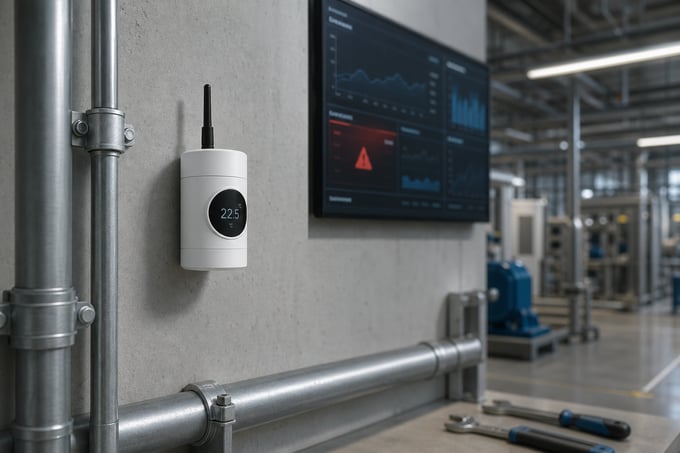
Wireless Temperature Sensors: The Complete Guide to Remote Temperature Monitoring Solutions


Wireless Temperature Sensors: The Complete Guide to Remote Temperature Monitoring Solutions
Temperature monitoring is critical across numerous industries, from wastewater treatment to pharmaceutical manufacturing. As technology advances, wireless temperature sensors have emerged as the go-to solution for reliable, real-time temperature monitoring. This comprehensive guide explores everything you need to know about wireless temperature sensors, their applications, and how they're revolutionizing industrial monitoring systems.
What Are Wireless Temperature Sensors?
Wireless temperature sensors are sophisticated devices that measure temperature and transmit data without physical connections. These smart sensors combine temperature measurement capabilities with wireless communication technology, enabling remote monitoring and data collection. Unlike traditional wired sensors, they offer greater flexibility, easier installation, and reduced maintenance costs.
Key Components of Wireless Temperature Sensors
A typical wireless temperature sensor consists of:
| Component | Function |
|---|---|
| Sensing Element | Measures actual temperature (typically thermistor or thermocouple) |
| Transmitter | Converts and sends temperature data wirelessly |
| Power Source | Battery or energy harvesting system |
| Processing Unit | Manages data collection and transmission |
Benefits of Wireless Temperature Sensors
The adoption of wireless temperature sensors continues to grow due to their numerous advantages:
1. Enhanced Flexibility and Scalability
Wireless sensors can be easily repositioned or added to existing networks without the need for additional wiring. This flexibility makes them ideal for expanding monitoring systems or adapting to changing facility layouts.
2. Cost-Effective Installation
By eliminating the need for extensive wiring, wireless sensors significantly reduce installation costs. Studies show that wireless sensor installation can be up to 80% less expensive than wired alternatives.
3. Remote Monitoring Capabilities
Modern wireless temperature sensors integrate seamlessly with cloud-based monitoring systems, enabling real-time access to temperature data from anywhere in the world. This capability is particularly valuable for facilities requiring continuous monitoring and immediate response to temperature fluctuations.
Applications Across Industries
Wastewater Treatment
In wastewater treatment facilities, wireless temperature sensors play a crucial role in monitoring:
- Digester temperatures - Chemical reaction processes - Equipment operating temperatures - Effluent temperature complianceIndustrial Manufacturing
Manufacturing facilities utilize wireless temperature sensors for:
- Process control - Equipment monitoring - Product quality assurance - Environmental monitoringIntegration with SCADA Systems
Wireless temperature sensors can be seamlessly integrated with Supervisory Control and Data Acquisition (SCADA) systems, providing comprehensive monitoring and control capabilities. This integration enables:
| Feature | Benefit |
|---|---|
| Real-time Monitoring | Immediate access to temperature data |
| Automated Alerts | Instant notification of temperature anomalies |
| Data Logging | Historical temperature trend analysis |
| Remote Control | Adjustment of connected systems based on temperature readings |
Best Practices for Implementation
To maximize the effectiveness of wireless temperature sensors, consider these implementation guidelines:
1. Site Survey
Conduct a thorough site survey to identify potential interference sources and optimal sensor placement locations. This step is crucial for ensuring reliable wireless communication.
2. Power Management
Implement effective power management strategies to extend battery life. This might include adjusting transmission intervals and utilizing energy-efficient communication protocols.
3. Redundancy Planning
Design systems with appropriate redundancy to ensure continuous monitoring even if individual sensors fail.
Choosing the Right Wireless Temperature Sensor
When selecting wireless temperature sensors, consider these critical factors:
| Factor | Considerations |
|---|---|
| Measurement Range | Required temperature range for application |
| Accuracy | Precision requirements for the process |
| Communication Protocol | Compatibility with existing systems |
| Environmental Conditions | Protection requirements (IP rating) |
Future Trends in Wireless Temperature Sensing
The wireless temperature sensor market continues to evolve with emerging technologies:
IoT Integration
Integration with Internet of Things (IoT) platforms is becoming standard, enabling more sophisticated data analysis and predictive maintenance capabilities.
Energy Harvesting
Advanced energy harvesting technologies are reducing or eliminating the need for battery replacement, lowering maintenance costs and improving reliability.
Conclusion
Wireless temperature sensors represent a significant advancement in temperature monitoring technology. Their combination of flexibility, reliability, and cost-effectiveness makes them an invaluable tool across various industries. As technology continues to evolve, these sensors will become even more integral to modern industrial operations.


